Premium Desiccants for Refrigerant Systems
About Shanghai Jiuzhou Chemicals Co., Ltd.
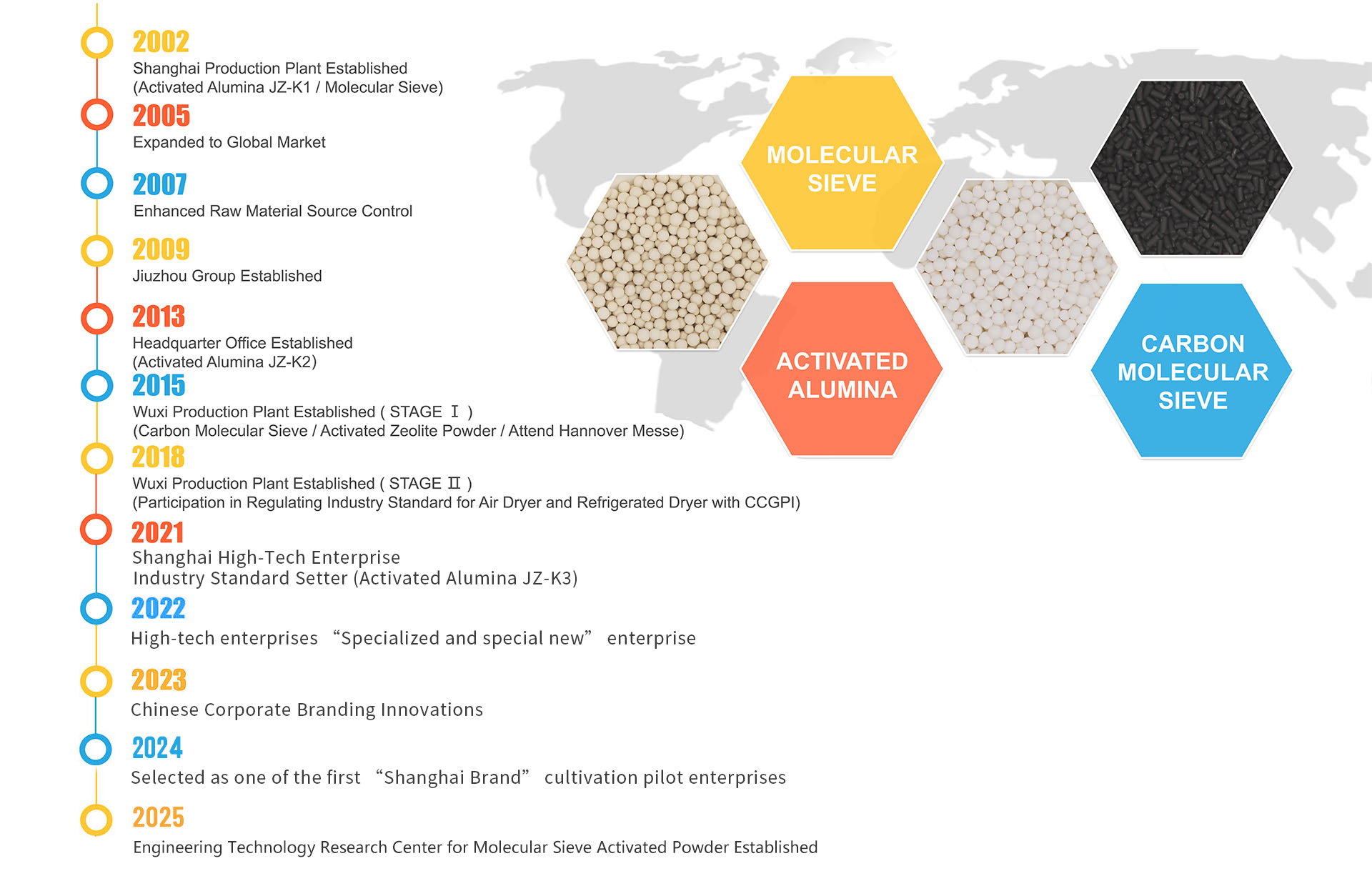
Shanghai Jiuzhou Chemicals Co., Ltd. is located in the biggest Economic Development city, Shanghai. Over the years, Jiuzhou has always adhered to the "quality control, innovation" principles, committed to the development, research, and manufacturing of high-quality innovative chemical products. Our main products include various molecular sieve powders, molecular sieves, activated powder, activated alumina, aluminum oxide catalysts, different types of alumina packing and ceramic balls, sodium silicates, aluminum hydroxide, zeolite 4A, sodium carbonates, SLES, etc. All of our products have passed the ISO9001: 2008 quality management system certification and TUV & SGS Certification.
Jiuzhou factory has a professional and world-class research team and experts in chemical product resources. We use the best in international production technology and professional production equipment, constructed in line with national standards and supported by a large multipurpose plant monitoring and analysis instrument composition in our central laboratory. In terms of quality inspection, Jiuzhou has controlled and ensured that all products meet international standards.
Jiuzhou's technical strength and industry reputation are leading the industry in the field of desiccants, with senior experts and technical reserves, automated multi-functional production workshops, and a central laboratory and dynamic laboratory composed of large-scale monitoring and analysis instruments. In terms of quality control and supporting services, a scientific and complete operating system has been established. Joozeo products are exported to all parts of the world, and we have established a distribution network in the United States, Southeast Asia, Japan, Europe, North and South America, the Middle East, and other places to provide partners with high-quality products, customized services, and more energy-saving and environmentally friendly adsorption solutions.
The Crucial Role of Activated Alumina in Refrigerant Drying
Refrigeration and air conditioning systems are highly sensitive to moisture contamination. Water in a refrigerant loop can lead to ice formation at expansion valves, corrosion of system components, and the chemical degradation of compressor oils. Activated alumina acts as a reliable safeguard, actively adsorbing trace moisture and neutralizing acidic byproducts that form when refrigerants react with water at high temperatures.
Why Activated Alumina is Preferred for Refrigerant Systems
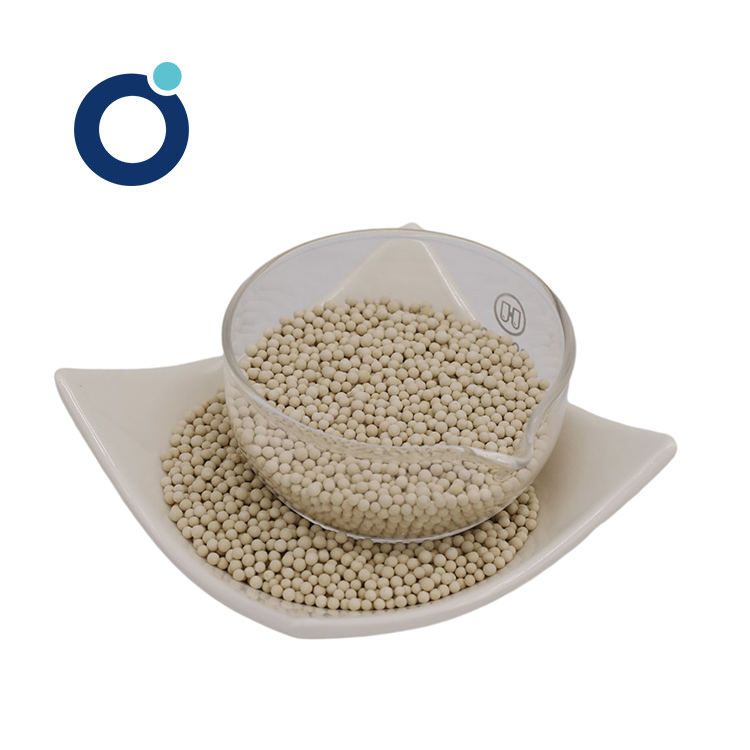
Activated alumina is a highly porous form of aluminum oxide (Al2O3) with a massive surface area, typically exceeding 300 square meters per gram. Its surface is covered with microscopic pores that capture water molecules through physical adsorption. Unlike other desiccants, activated alumina maintains its structural integrity even when saturated, preventing the release of dust or particles that could clog valves or damage compressor pistons.
High Mechanical Strength
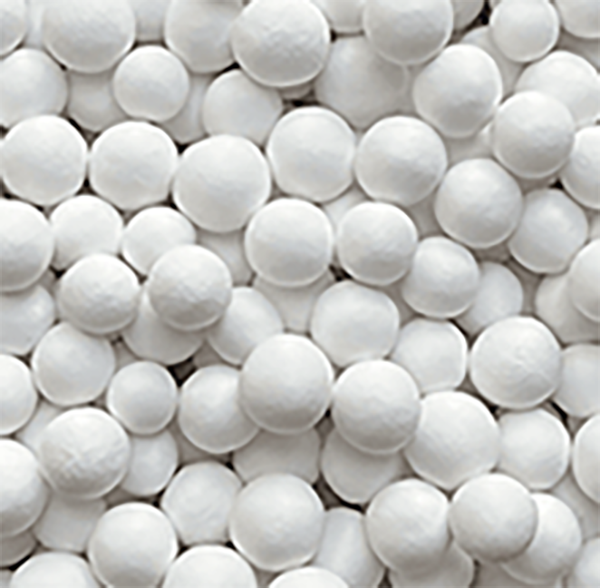
Refrigerant systems experience constant pressure fluctuations and vibrations. Activated alumina beads resist crushing and attrition, ensuring that no particulate matter enters the refrigeration cycle.
Acid Adsorption Capacity
In addition to water, activated alumina effectively removes inorganic and organic acids, preventing acid-induced corrosion of motor windings and copper pipes.
Thermal Stability
Refrigeration systems can operate at high temperatures, especially near the compressor discharge. Activated alumina retains its adsorption capability across a wide temperature range.
Chemical Compatibility
It is chemically inert to standard HFC, HCFC, and newer HFO refrigerants, as well as synthetic lubricants like POE (polyolester) and PAG (polyalkylene glycol) oils.
Activated Alumina Price Factors & Commercial Dynamics
Understanding the economics of activated alumina is vital for procurement managers and system designers. The activated alumina price for refrigerant drying is influenced by a combination of raw material costs, manufacturing sophistication, global supply chains, and specific performance characteristics required by the HVAC industry.
Key Factors Influencing Activated Alumina Pricing
1. Raw Material Costs (Bauxite and Alumina Trihydrate): The primary raw material for activated alumina is bauxite, which is processed into alumina trihydrate. Fluctuations in global mining outputs, environmental regulations on mining, and energy costs directly impact the baseline cost of these raw materials.
2. Activation and Calcination Energy: The process of "activating" alumina requires heating the raw material to temperatures between 300°C and 600°C. Because this is an energy-intensive thermal process, global energy prices (natural gas and electricity) play a major role in determining the final production cost.
3. Pore Structure and Bead Size Customization: Standard grades of activated alumina are relatively inexpensive. However, refrigerant-grade activated alumina requires precise control over pore size distribution and bead diameter (commonly 1/8" or 1/16"). Custom configurations to maximize water absorption without restricting refrigerant flow command a premium price.
4. Packaging and Logistics: Since activated alumina is highly hygroscopic, it must be shipped in moisture-proof packaging, such as steel drums with plastic liners or heavy-duty super sacks. The cost of raw steel and ocean freight rates significantly affects the landed cost for international buyers.
Global Market Trends and Future Outlook
The global demand for activated alumina in refrigerant drying is growing, driven by the expansion of the cold chain logistics sector, commercial HVAC installations, and automotive air conditioning manufacturing. As environmental regulations phase out older HCFC refrigerants in favor of eco-friendly HFOs, desiccants must adapt. Newer refrigerants are more prone to hydrolytic breakdown, making high-capacity acid and moisture removal even more critical. This shift is driving demand for premium-grade activated alumina, stabilizing prices at a higher baseline due to advanced formulation requirements.
Deeper Application Scenarios in Modern Refrigeration
Activated alumina is not a one-size-fits-all solution; its application is tailored to the specific demands of different refrigeration systems.
1. Commercial HVAC and Chillers
Large-scale building air conditioning systems use centrifugal or screw chillers that circulate massive volumes of refrigerant. In these systems, filter-driers containing activated alumina are installed in the liquid line to continuously clean the system. Any moisture ingress during maintenance or through seals is immediately captured, preventing costly compressor failures.
2. Industrial Cold Storage and Food Processing
Industrial refrigeration plants, often using ammonia or carbon dioxide (CO2) systems, require ultra-dry conditions to prevent ice formation on evaporator coils. Activated alumina ensures that the dew point of the refrigerant remains well below the operating temperature of the system, maintaining optimal heat transfer efficiency and reducing energy consumption.
3. Transport Refrigeration (Reefer Containers)
Shipping perishable goods across oceans requires highly reliable refrigeration units. Transport systems are exposed to extreme environmental variations, from tropical heat to arctic cold. Activated alumina's robust physical strength and high capacity under varying thermal loads make it the ideal desiccant for reefer containers.
4. Automotive Air Conditioning (MAC Systems)
With the transition to R-1234yf refrigerant in modern vehicles, moisture control has become more critical due to the refrigerant's chemical properties. Compact filter-drier cartridges containing activated alumina and molecular sieve blends are integrated into the condenser assembly to protect the system over the vehicle's lifespan.
Future Trends in Refrigerant Desiccant Technologies
The HVAC and refrigeration industry is undergoing a massive transformation toward sustainability. This shift directly influences the development and usage of activated alumina.
Eco-Friendly Manufacturing of Desiccants
As carbon footprint regulations tighten, manufacturers like Shanghai Jiuzhou Chemicals are investing in cleaner production technologies. This includes utilizing waste heat recovery during the calcination process and sourcing raw materials from certified sustainable mines. Green-certified activated alumina is becoming a key requirement for LEED-certified building projects and eco-conscious OEM manufacturers.
Hybrid Adsorption Systems
To achieve the lowest possible dew points while maintaining high acid capacity, modern filter-driers increasingly utilize hybrid cores. These cores combine the rapid moisture-adsorption kinetics of molecular sieves with the high acid-neutralizing capacity and mechanical strength of activated alumina. This synergy ensures maximum protection for modern synthetic lubricants and refrigerants.