Advanced Water Defluoridation Systems
Highly optimized molecular structures engineered for targeted fluoride removal and pre-treatment systems.
1. The Global Challenge of Fluoride Contamination in Water
Fluoride is a naturally occurring element found in varying concentrations across the earth's crust. While trace amounts of fluoride are essential for dental health and preventing cavities, excessive exposure through drinking water poses severe risks to human health. According to the World Health Organization (WHO), the permissible limit of fluoride in drinking water is 1.5 mg/L. Exceeding this threshold leads to endemic fluorosis—a debilitating condition manifesting as dental fluorosis, skeletal deformation, joint stiffness, and neurological disorders. Globally, over 200 million people across dry regions of Africa, Asia, and the Americas are exposed to dangerous levels of fluoride in groundwater sources.
Traditional water treatment mechanisms such as chemical precipitation, coagulation, electrodialysis, and reverse osmosis have been deployed to mitigate this issue. However, these methods often come with substantial drawbacks, including high operational costs, massive energy consumption, secondary pollution via chemical sludge, and a lack of selectivity for fluoride ions. This is where advanced adsorption technology, specifically utilizing Carbon Molecular Sieves (CMS), emerges as a revolutionary, cost-effective, and highly selective alternative for water defluoridation.
2. What is Carbon Molecular Sieve (CMS) and How Does It Work for Defluoridation?
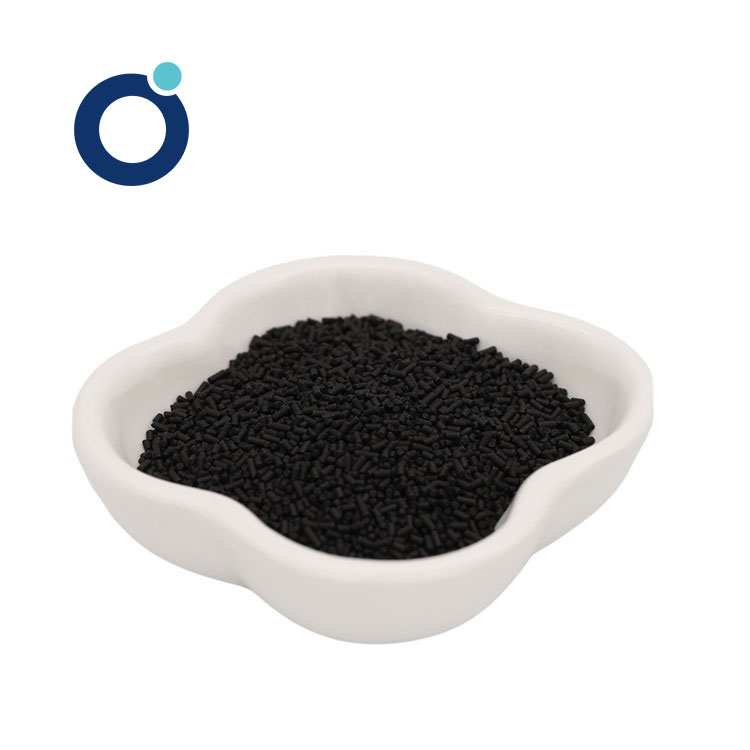
Carbon Molecular Sieves (CMS) are specialized porous carbon materials characterized by highly uniform micropores. Unlike standard activated carbons, which exhibit a wide range of pore sizes, CMS is engineered to have a precise pore size distribution, typically ranging from 0.3 to 0.9 nanometers. This precise pore architecture allows CMS to act as a molecular filter, separating molecules based on their kinetic diameters and charge configurations.
For water defluoridation, raw CMS is often modified or doped with metal oxides (such as aluminum, iron, zirconium, or lanthanum) to introduce active adsorption sites that have a high affinity for fluoride ions. The mechanism of fluoride removal using modified Carbon Molecular Sieves involves a combination of physical and chemical processes:
- Electrostatic Attraction: The surface charge of the modified CMS can be adjusted to be positive under specific pH conditions, attracting the negatively charged fluoride ions (F-) in solution.
- Ion Exchange: The hydroxyl groups (-OH) or other ligand groups on the metal oxide-doped carbon surface are replaced by fluoride ions due to the strong electronegativity and small ionic radius of fluoride.
- Intra-particle Diffusion: The highly organized micropore network of the carbon molecular sieve allows water molecules and fluoride ions to diffuse rapidly, maximizing contact with active sites while excluding larger organic pollutants.
"The application of Carbon Molecular Sieves in water defluoridation represents a paradigm shift from simple filtration to molecularly engineered selective separation, ensuring high purity water without stripping beneficial minerals."
3. Industrial and Commercial Landscape of CMS Defluoridation
The industrial landscape for water treatment is undergoing a rapid transition towards sustainability and circular economy principles. Carbon Molecular Sieves fit perfectly into this framework due to their durability, ease of regeneration, and low environmental footprint. Industries such as semiconductor manufacturing, electroplating, glass etching, and fertilizer production generate wastewater with extremely high fluoride concentrations, often exceeding 100 mg/L. Discharging this wastewater without treatment is heavily penalized by environmental regulations worldwide.
In municipal water treatment, particularly in rural and decentralized areas of developing nations, modified CMS filters are gaining traction. Unlike reverse osmosis systems that require high pressure and electricity, CMS-based fixed-bed columns operate under gravity or low-pressure pumps. This makes them highly suitable for remote villages where infrastructure is limited. Commercially, the demand for highly stable, regenerable adsorption media is driving manufacturers to develop robust CMS products that can undergo hundreds of adsorption-desorption cycles without structural degradation.
4. Comparative Analysis: CMS vs. Traditional Adsorbents
To understand the commercial viability of Carbon Molecular Sieves for water defluoridation, it is essential to compare them with existing conventional adsorbents like Activated Alumina (AA) and Bone Charcoal:
As illustrated, modified Carbon Molecular Sieves outperform traditional materials in terms of adsorption capacity and operational pH versatility. While the initial capital cost of CMS might be higher than activated alumina, its long operational lifespan, minimal attrition loss, and high regeneration rate lead to a significantly lower Total Cost of Ownership (TCO) over the lifetime of the water treatment plant.
5. Engineering Defluoridation Systems: Key Design Parameters
Implementing Carbon Molecular Sieves in industrial water purification requires careful consideration of reactor design and kinetics. The performance of a CMS fixed-bed column is governed by several parameters:
- Empty Bed Contact Time (EBCT): The time that water remains in contact with the CMS media. An optimal EBCT (usually between 5 to 15 minutes) ensures complete diffusion of fluoride ions into the micropores.
- Hydraulic Loading Rate (HLR): This determines the velocity of the water passing through the bed. High flow rates can cause early breakthrough, leaving untreated fluoride in the effluent.
- Regeneration Strategy: Over time, the CMS becomes saturated. Regeneration is typically achieved using a mild alkaline solution (such as 1-2% NaOH) to displace the fluoride ions, followed by an acid wash to restore the positive surface charge of the adsorbent.
6. Future Development Trends and Market Dynamics
The global market for advanced water purification materials is projected to grow exponentially over the next decade. Key drivers include tightening environmental standards, increasing water scarcity, and the rise of smart city initiatives. The development of Carbon Molecular Sieves for defluoridation is moving towards several exciting trends:
Green Synthesis: Researchers and manufacturers are focusing on synthesizing CMS from renewable biomass precursors, such as agricultural waste (coconut shells, rice husks, and agricultural residues). This reduces raw material costs and aligns with global carbon-neutral goals.
Nanoparticle Hybridization: Combining carbon molecular sieves with graphene oxide or carbon nanotubes is showing promising results in laboratory tests. These hybrid systems offer even higher surface areas and accelerated kinetic rates.
AI-Driven Optimization: Integrating IoT sensors and AI algorithms into filtration systems allows for real-time monitoring of fluoride levels and predictive modeling of adsorbent exhaustion. This ensures maximum efficiency and prevents accidental exposure to contaminated water.
About Shanghai Jiuzhou Chemicals
A global leader in advanced molecular sieve manufacturing and innovative adsorption solutions.
Shanghai Jiuzhou Chemicals Co., Ltd. Located in the biggest Economic Development city Shanghai. Over the years Jiuzhou has always adhered to the "quality control, innovation" principles, committed to the development, research, manufacturing of high quality innovative chemical products. Our main products includes various molecular sieve powders, molecular sieves, activated powder, activated alumina, aluminum oxide catalysts, different types of alumina packing and ceramic balls, sodium silicates, aluminum hydroxide,zeolite 4A, sodium carbonates, SLES, etc. Our all products passed the ISO9001: 2008 quality management system certification and TUV & SGS Certification.
Jiuzhou factory has a professional and world-class research team and experts in chemical product resources.We use the best in international prodution technonlogy and professional production equipment, constructed in line with national standards and by the large multipurpose plant monitoring, analysis instrument composition the central laboratory. And in quality inspection aspect Jiuzhou have controlled and that products meet international standards.
Jiuzhou's technical strength and industry reputation are leading the industry in the field of desiccants, with senior experts and technical reserves, automated multi-functional production workshops, and a central laboratory and dynamic laboratory composed of large-scale monitoring and analysis instruments. It is in quality control And in terms of supporting services, a set of scientific and complete operating system has been established Joozeo products are exported to all parts of the world, and have established a distribution network in the United States, Southeast Asia, Japan, Europe, North and South America, the Middle East and other places to provide partners with high-quality products, customized services, and more energy-saving and environmentally friendly adsorption solutions.
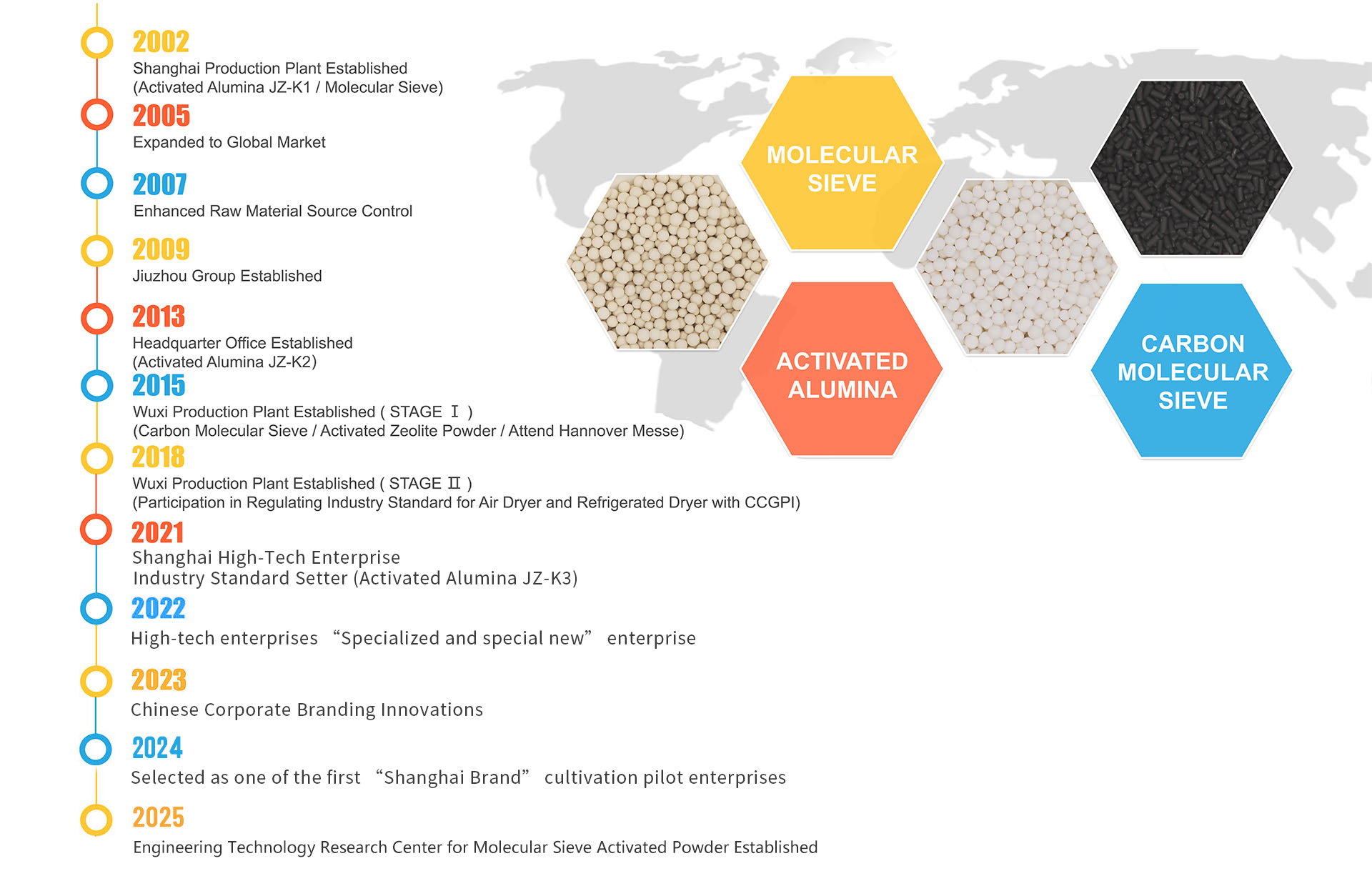
Our Complete Adsorption & Defluoridation Portfolio
Explore our full range of molecular sieves, silica gels, and custom adsorbents designed for industrial purification.