Featured Molecular Sieve & Desiccant Solutions
The Critical Role of Mol Sieve 5a in Refrigerant Dehydration
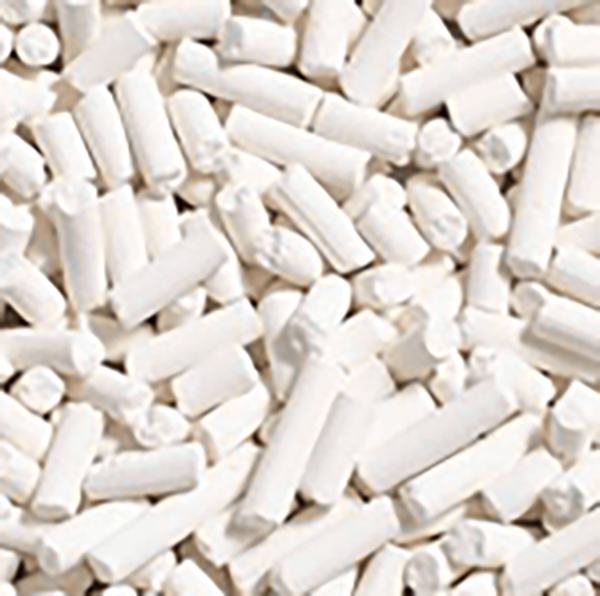
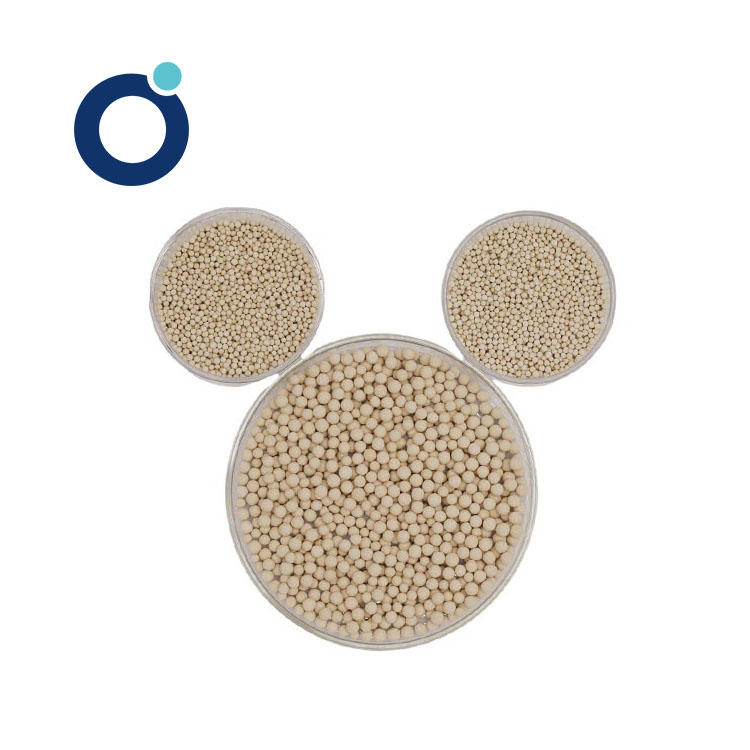
In modern heating, ventilation, air conditioning, and refrigeration (HVAC/R) industries, maintaining the absolute purity of the refrigerant cycle is paramount. Moisture is the single most destructive contaminant that can enter a closed loop system. The introduction of Molecular Sieve 5A (Mol Sieve 5a) has revolutionized the way engineers approach system dehydration. Characterized by its precise crystalline structure and a nominal pore opening of 5 Angstroms (0.5 nm), Molecular Sieve 5A acts as a highly selective physical filter, trapping water molecules while completely excluding the larger molecules of the refrigerant fluid and compressor lubricants.
When moisture enters a refrigeration loop, it triggers a chain reaction of chemical degradation. Water reacts with modern synthetic lubricants (such as Polyol Esters or PAG oils) and fluorinated refrigerants to form highly corrosive acids. These acids attack motor windings, cause copper plating on bearing surfaces, and lead to catastrophic compressor failure. Mol Sieve 5a prevents this entire degradation pathway by keeping moisture levels below critical thresholds (typically
Adsorption Chemistry: How the 5Å Pore Matrix Operates
Molecular Sieve 5A is an alkali aluminosilicate in the calcium-exchanged form of the Type A crystal structure. The replacement of sodium ions with calcium ions creates a stable framework with a 5 Angstrom pore diameter. This dimension is critical. A water molecule has a kinetic diameter of approximately 2.65 Å, allowing it to easily pass through the pore openings and become trapped within the highly polar internal cavities of the zeolite cage. Conversely, common refrigerants (such as R-134a, R-410A, R-32, and the newer hydrofluoroolefins like R-1234yf) have kinetic diameters significantly larger than 5 Å. This ensures that only water is adsorbed, preventing co-adsorption which would otherwise deplete the desiccant capacity and risk catalytic decomposition of the refrigerant gas itself.
Commercial and Industrial Status of Refrigerant Drying
The global transition toward environmentally friendly refrigerants with low Global Warming Potential (GWP) has fundamentally altered the chemistry of HVAC/R systems. The older CFC and HCFC gases are rapidly being replaced by HFCs and HFOs. These modern refrigerants require synthetic lubricants like Polyol Ester (POE) and Polyalkylene Glycol (PAG). Unlike traditional mineral oils, these synthetic oils are highly hygroscopic—meaning they absorb moisture from the surrounding air at an accelerated rate. This shift has placed unprecedented demands on filter driers.
Industrial Challenges Solved by Molecular Sieve 5A
- Prevention of Ice Choking: In low-temperature refrigeration (e.g., deep-freeze logistics and commercial display cases), any free moisture will instantly freeze at the expansion valve or capillary tube, choking the flow of refrigerant and halting the cooling cycle. Mol Sieve 5a ensures the dew point of the refrigerant remains far below the lowest operating temperature of the system.
- Acid Scavenging Support: While primarily a desiccant, the high surface polarity of Molecular Sieve 5A aids in stabilizing the chemical environment inside the compressor loop, mitigating the onset of hydrolysis that generates hydrochloric and hydrofluoric acids.
- Mechanical Integrity and Vibration Resistance: Refrigerant systems, especially in automotive air conditioning and transport refrigeration, are subject to intense continuous vibration. Inferior desiccants can break down into powder (attrition), clogging expansion valves and damaging compressor cylinders. Jiuzhou's Molecular Sieve 5A is engineered with exceptional crush strength to eliminate this risk.
Market Development and Regulatory Drivers
With strict regulations such as the European F-Gas Regulation and the Kigali Amendment to the Montreal Protocol, the HVAC/R industry is shifting toward highly sensitive natural refrigerants (like CO2, R-744) and mildly flammable HFO blends. These systems operate at much higher pressures and thermal ranges. Consequently, the demand for high-grade, thermally stable desiccants like Mol Sieve 5a is expanding rapidly. Industrial manufacturers are now integrating solid-core filter driers filled with high-density molecular sieve beads directly into the OEM assembly line to guarantee lifetime system protection.
Deep-Dive Application Scenarios
1. Automotive Air Conditioning and Electric Vehicle (EV) Thermal Management
Modern automotive air conditioning systems, particularly in electric vehicles, utilize advanced heat pump systems that run continuously to regulate both cabin temperature and battery pack thermal states. The refrigerant of choice, R-1234yf, is highly sensitive to moisture-induced degradation. Molecular Sieve 5A is the standard desiccant packaged inside the receiver-drier of these vehicles. It must withstand extreme temperature fluctuations (from -40°C to over 120°C under the hood) and severe mechanical shocks without losing its structural integrity or moisture-holding capacity.
2. Commercial Cold Chains & Supermarket Refrigeration
Supermarket refrigeration loops consist of extensive piping networks with hundreds of brazed joints, making them highly susceptible to microscopic moisture ingress over years of operation. During routine maintenance or refrigerant recharging, ambient air can enter the system. Large-scale filter driers packed with Molecular Sieve 5A are installed in the liquid line to act as a continuous purification barrier, protecting the massive capital investment of the central rack compressors.
3. Industrial Gas Liquefaction and Cryogenics
Before gases like methane, nitrogen, or oxygen can be liquefied at cryogenic temperatures, they must undergo deep dehydration. Any residual moisture will freeze solid, blocking heat exchangers and causing catastrophic pressure build-ups. Mol Sieve 5a is utilized in dual-bed adsorption columns to dry feed gases down to sub-ppm levels before they enter the cold box, ensuring continuous, safe, and efficient cryogenic operations.
Shanghai Jiuzhou Chemicals: Industry Leadership
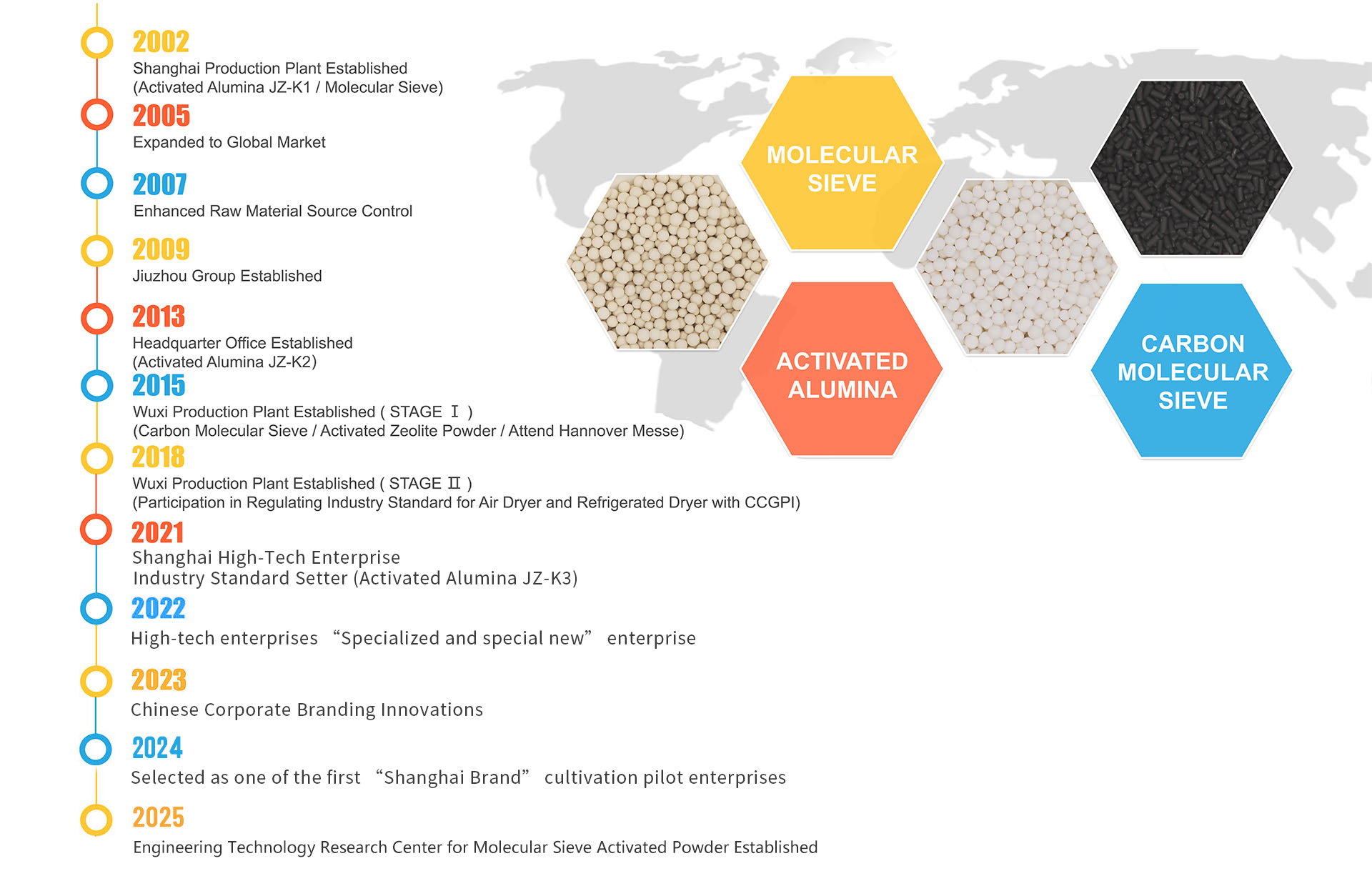
Shanghai Jiuzhou Chemicals Co., Ltd. is located in the largest economic development city, Shanghai. Over the years, Jiuzhou has always adhered to the "quality control, innovation" principles, committed to the development, research, and manufacturing of high-quality, innovative chemical products. Our main products include various molecular sieve powders, molecular sieves, activated powder, activated alumina, aluminum oxide catalysts, different types of alumina packing, ceramic balls, sodium silicates, aluminum hydroxide, zeolite 4A, sodium carbonates, and SLES. All of our products have passed the ISO9001: 2008 quality management system certification, as well as TUV and SGS certifications.
Jiuzhou factory boasts a professional and world-class research team and experts in chemical product resources. We leverage the best in international production technology and professional production equipment, constructed in line with national standards. Our operations are supported by a large-scale multipurpose plant monitoring and analysis instrument composition in our central laboratory. In terms of quality inspection, Jiuzhou has established rigid controls to ensure all products meet and exceed international standards.
Our technical strength and industry reputation lead the field of desiccants. With senior experts, technical reserves, automated multi-functional production workshops, and a dynamic laboratory, we have established a scientific and complete operating system. Joozeo products are exported worldwide, with established distribution networks in the United States, Southeast Asia, Japan, Europe, North and South America, and the Middle East, providing partners with high-quality products, customized services, and energy-saving, environmentally friendly adsorption solutions.
Future Trends in Refrigerant Desiccation Technology
The HVAC/R industry is moving toward smarter, more compact, and highly efficient systems. This evolution directly impacts desiccant design. Future trends point to the development of hybrid adsorption cores where Molecular Sieve 5A is combined with specialized binders to offer both moisture adsorption and acid neutralization in a single matrix. Additionally, as the industry transitions to natural refrigerants like carbon dioxide (R-744), operating pressures are increasing up to 130 bar. Desiccants must possess superior mechanical integrity to withstand these high-pressure gas velocities without fracturing.
Shanghai Jiuzhou Chemicals is at the forefront of this research, developing customized molecular sieves with optimized pore distributions and enhanced physical durability. By matching our desiccant technology to the specific thermodynamic properties of next-generation refrigerants, we help our global partners achieve higher energy efficiency, reduce system downtime, and contribute to a more sustainable, low-carbon future.