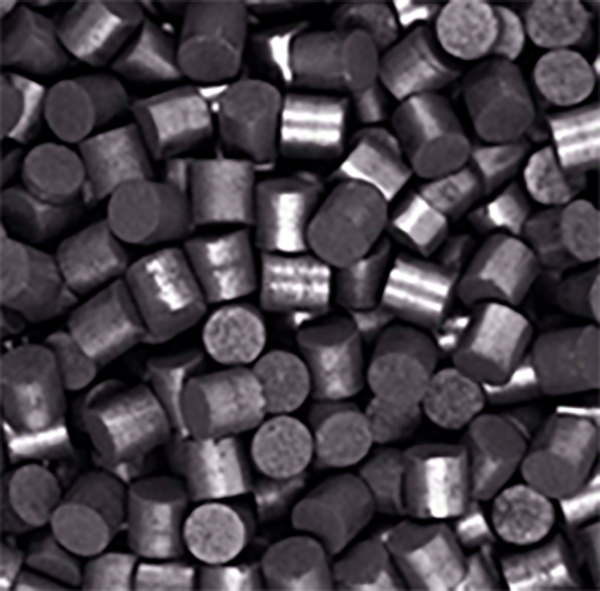
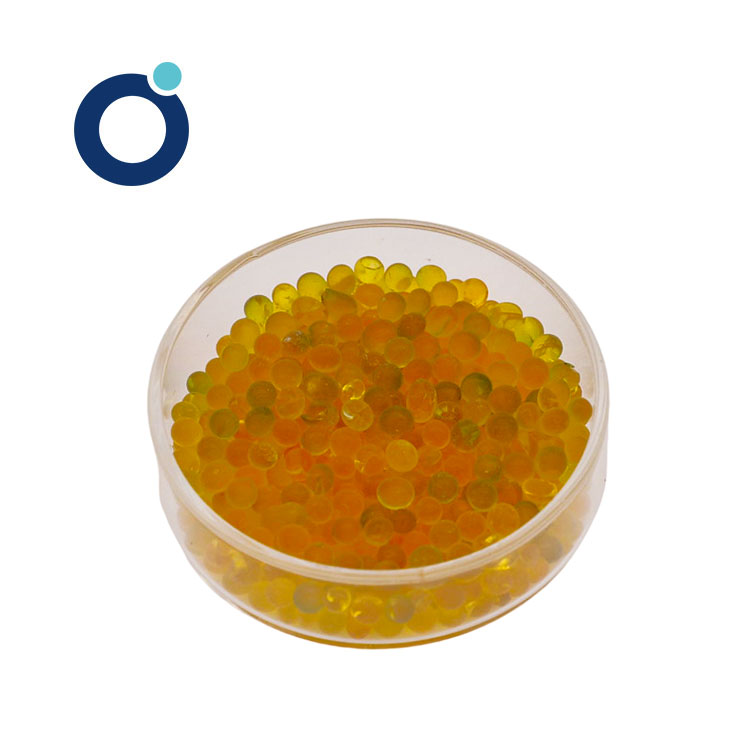
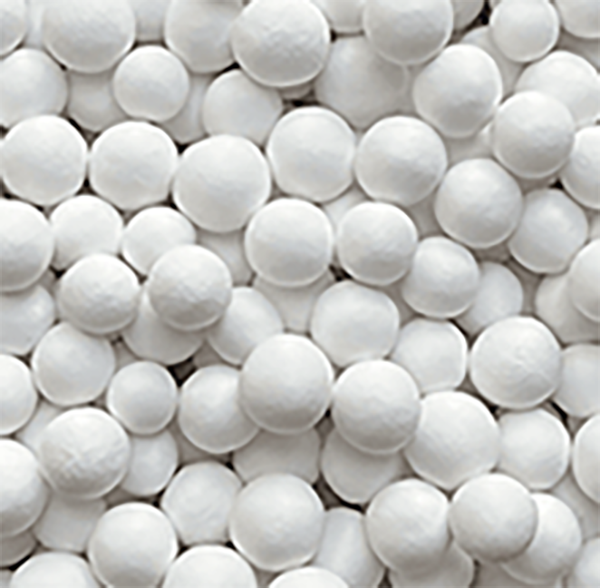
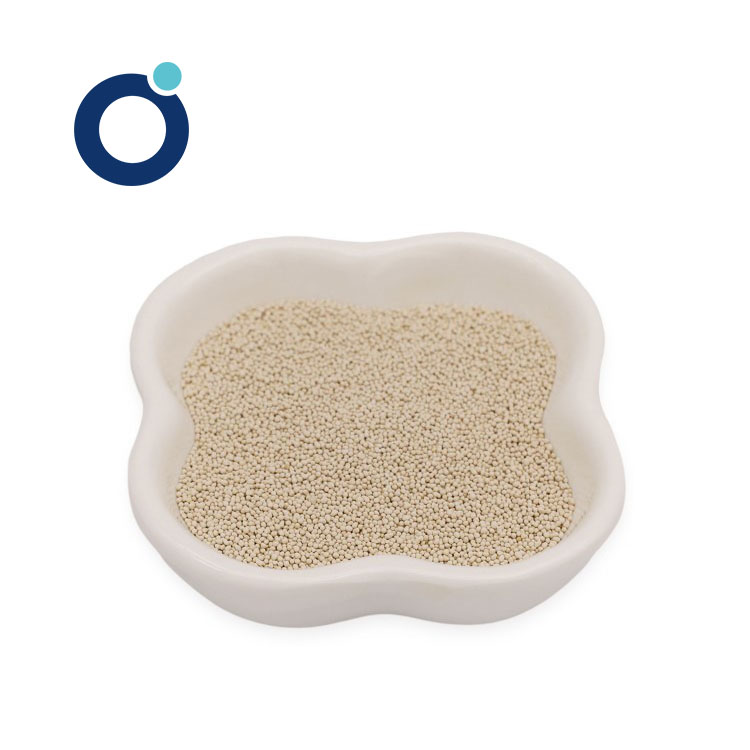
Featured Adsorption Media for Water Purification
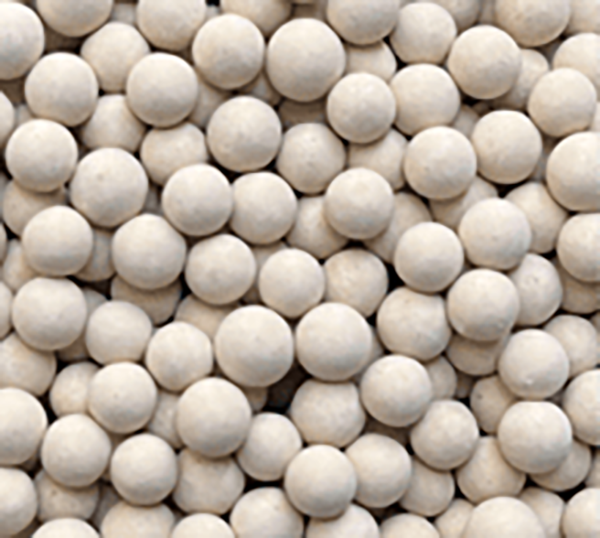
Understanding the Global Arsenic Crisis in Water Supply
Arsenic contamination in groundwater is a critical environmental and public health concern affecting millions of people worldwide. Identified as a Group 1 human carcinogen by the International Agency for Research on Cancer (IARC), long-term exposure to even trace amounts of arsenic through drinking water leads to severe health conditions, including skin lesions, cardiovascular diseases, neurological disorders, and various forms of cancer (lung, bladder, and skin). The World Health Organization (WHO) and the United States Environmental Protection Agency (EPA) have established a strict maximum contaminant level (MCL) of 10 micrograms per liter (10 ppb) for arsenic in drinking water. Achieving this level economically and consistently requires advanced adsorption technologies, where molecular sieves play a pivotal role.
Arsenic typically co-exists in natural water systems in two primary inorganic oxidation states: trivalent arsenite [As(III)] and pentavalent arsenate [As(V)]. Under aerobic conditions, such as surface waters, As(V) is the dominant species, existing primarily as negatively charged ions (H2AsO4- and HAsO42-) at neutral pH. Conversely, under anaerobic conditions typical of deep groundwater aquifers, As(III) is the prevalent form, existing mainly as a neutral, uncharged molecule (H3AsO3) at pH values below 9.2. Because neutral molecules do not interact strongly with electrostatic charges on standard adsorbents, As(III) is significantly more difficult to remove than As(V). This chemical dichotomy demands highly advanced, engineered molecular sieves capable of targeted ion exchange, catalytic oxidation, and surface complexation.
Key Insight: The challenge of arsenic removal lies not just in filtering particles, but in targeting dissolved molecular species at the parts-per-billion level. Engineered molecular sieves offer the precise pore architecture and surface chemistry required to achieve this extreme selectivity.
The Science of Molecular Sieves in Arsenic Remediation
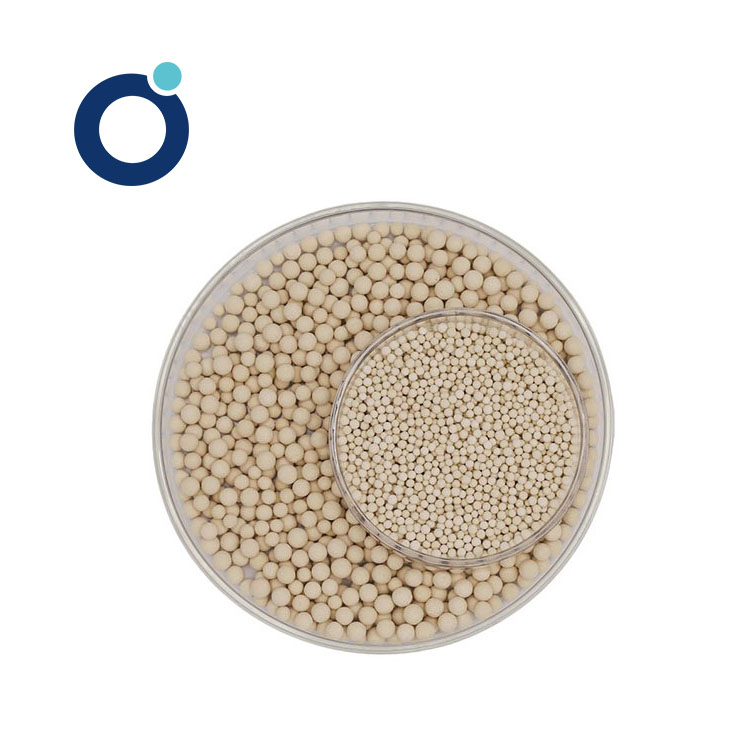
Molecular sieves are crystalline aluminosilicates, commonly known as zeolites, characterized by highly ordered, three-dimensional framework structures containing channels and cavities of precise, uniform molecular dimensions. These frameworks carry a net negative charge due to the substitution of silicon (Si4+) by aluminum (Al3+) in the tetrahedral structures. This negative charge is balanced by exchangeable cations (such as sodium, potassium, or calcium) residing within the pore channels. This unique configuration gives molecular sieves their exceptional ion-exchange capacity, large internal surface area, and highly tunable surface chemistry.
Standard zeolites, however, exhibit limited affinity for anionic contaminants like arsenate [As(V)] due to electrostatic repulsion. To overcome this limitation and optimize molecular sieves for arsenic removal, scientists and engineers modify the zeolite matrix through several advanced pathways:
1. Cationic Surfactant Modification (SMZs)
By treating natural or synthetic zeolites with cationic surfactants, such as hexadecyltrimethylammonium (HDTMA), a bilayer of surfactant molecules forms on the external surface of the zeolite. This reverses the surface charge from negative to positive, creating anion-exchange sites that can strongly attract and bind arsenate [As(V)] ions via electrostatic interaction.
2. Transition Metal Doping & Nanoparticle Impregnation
Incorporating transition metals—specifically iron (Fe), manganese (Mn), zirconium (Zr), or titanium (Ti)—into the molecular sieve framework or onto its surface significantly enhances arsenic adsorption. Iron oxides and hydroxides have an exceptionally high affinity for both arsenic species. Iron-modified molecular sieves utilize Lewis acid-base interactions to form stable inner-sphere surface complexes with arsenite and arsenate, ensuring that the bound arsenic is not easily leached back into the treated water.
3. Bifunctional Catalytic Adsorption
Advanced molecular sieves are engineered to perform dual functions: catalytic oxidation of As(III) to As(V), followed by immediate adsorption of the resulting As(V). Impregnating the molecular sieve framework with manganese oxides (MnO2) allows the system to oxidize neutral arsenite molecules into charged arsenate ions without requiring external chemical oxidants (like chlorine or ozone), which can produce harmful byproducts.
High Selectivity
Maintains high arsenic adsorption capacity even in the presence of competing anions like sulfates, nitrates, and bicarbonates.
Regenerability
Can be regenerated multiple times using mild alkaline solutions, significantly lowering the lifetime operational cost of water treatment plants.
Structural Stability
Resists physical attrition and chemical degradation under varying pH levels and water pressures, ensuring long service life.
Eco-Friendly Disposal
Spent media passes the Toxicity Characteristic Leaching Procedure (TCLP), allowing safe disposal in standard landfills.
Commercial and Industrial Status of Arsenic Adsorbents
The global market for arsenic removal technologies is experiencing robust growth, driven by tightening environmental regulations, increasing urbanization, and a growing awareness of water-borne health risks. Historically dominated by simple coagulation-filtration and activated alumina systems, the industry is rapidly transitioning toward high-performance molecular sieves and composite adsorbents.
In municipal water treatment, particularly in arsenic-hotspot regions such as the Bengal Basin (India and Bangladesh), the Midwestern United States, and Northern China, municipal authorities are upgrading older treatment plants with fixed-bed molecular sieve adsorption columns. The commercial appeal of molecular sieves lies in their low footprint, minimal sludge production (unlike coagulation processes), and ease of automation. Industrial sectors, including mining operations, metallurgical processing, and chemical manufacturing, generate wastewater with exceptionally high concentrations of arsenic. These industries rely on heavy-duty, engineered molecular sieve systems to meet strict effluent discharge standards before releasing wastewater into local water bodies.
Furthermore, the market is seeing a surge in demand for decentralized, Point-of-Use (POU) and Point-of-Entry (POE) residential filtration systems. Modern consumer water filters increasingly incorporate specialized molecular sieve cartridges to guarantee the complete removal of trace heavy metals, providing peace of mind to households relying on private well water.
Deep-Dive Application Scenarios
1. Municipal Groundwater Remediation Plants
In municipal settings, groundwater is pumped directly through large-scale pressurized vessels containing granular molecular sieve media. These systems operate in parallel or lead-lag configurations to ensure continuous operation during media regeneration or replacement. The high porosity of molecular sieves allows for rapid kinetics, meaning water can flow at higher velocities while still achieving complete arsenic removal, reducing the required size and capital cost of the treatment facility.
2. Acid Mine Drainage (AMD) & Metallurgical Effluents
Mining activities expose sulfide minerals to air and water, producing highly acidic runoff rich in dissolved arsenic and other heavy metals. Standard treatment methods often fail due to the extreme pH. Specially formulated, acid-resistant molecular sieves are deployed in these harsh environments. They selectively capture arsenic ions from highly acidic streams, allowing mining companies to recycle process water and comply with zero-liquid-discharge (ZLD) mandates.
3. Mobile Emergency Water Purification Units
In disaster-stricken areas or remote military deployments, access to clean drinking water is critical. Compact, mobile filtration units utilizing hybrid iron-doped molecular sieves can process raw, contaminated surface water or shallow well water into safe drinking water instantly without requiring electricity or complex chemical dosing systems.
4. Agricultural Irrigation Water Stabilization
Using arsenic-contaminated groundwater for crop irrigation (especially for water-intensive crops like rice) leads to bioaccumulation of arsenic in the food chain. Agricultural communities are beginning to deploy gravity-fed molecular sieve filtration beds at irrigation wellheads. By removing arsenic prior to field distribution, these systems protect crop yields and ensure food safety standards are met for global export markets.
Future Development Trends and Technological Innovations
The future of molecular sieves in water purification is closely aligned with nanotechnology and green chemistry. One of the most promising trends is the synthesis of nano-zeolites. By reducing the particle size of molecular sieves to the nanoscale, the external surface area and the accessibility of internal active sites increase exponentially, resulting in faster adsorption rates and higher capacity per unit volume.
Another major trend is the development of "smart" molecular sieves. Researchers are exploring the integration of responsive materials that can change their pore structure or surface charge in response to external stimuli (such as a mild electrical current or pH shift), allowing for instantaneous, chemical-free regeneration. Additionally, the industry is moving toward circular economy models, utilizing industrial waste products like fly ash or slag as raw materials to synthesize high-grade synthetic zeolites, lowering production costs and reducing the environmental footprint of manufacturing.
Finally, artificial intelligence and molecular modeling are playing a critical role in the design of next-generation adsorbents. By simulating the interactions between arsenic molecules and modified zeolite frameworks at the atomic level, scientists can predict and optimize performance before physically synthesizing the material, accelerating the R&D cycle for customized water treatment solutions.
Shanghai Jiuzhou Chemicals Co., Ltd.
Shanghai Jiuzhou Chemicals Co., Ltd. Located in the biggest Economic Development city Shanghai. Over the years Jiuzhou has always adhered to the “quality control, innovation ”principles, committed to the development, research, manufacturing of high quality innovative chemical products. Our main products includes various molecular sieve powders, molecular sieves, activated powder, activated alumina, aluminum oxide catalysts, different types of alumina packing and ceramic balls, sodium silicates, aluminum hydroxide,zeolite 4A, sodium carbonates, SLES, etc. Our all products passed the ISO9001: 2008 quality management system certification and TUV & SGS Certification.
Jiuzhou factory has a professional and world-class research team and experts in chemical product resources.We use the best in international prodution technonlogy and professional production equipment, constructed in line with national standards and by the large multipurpose plant monitoring, analysis instrument composition the central laboratory. And in quality inspection aspect Jiuzhou have controlled and that products meet international standards.
Jiuzhou's technical strength and industry reputation are leading the industry in the field of desiccants, with senior experts and technical reserves, automated multi-functional production workshops, and a central laboratory and dynamic laboratory composed of large-scale monitoring and analysis instruments. It is in quality control And in terms of supporting services, a set of scientific and complete operating system has been established Joozeo products are exported to all parts of the world, and have established a distribution network in the United States, Southeast Asia, Japan, Europe, North and South America, the Middle East and other places to provide partners with high-quality products, customized services, and more energy-saving and environmentally friendly adsorption solutions.