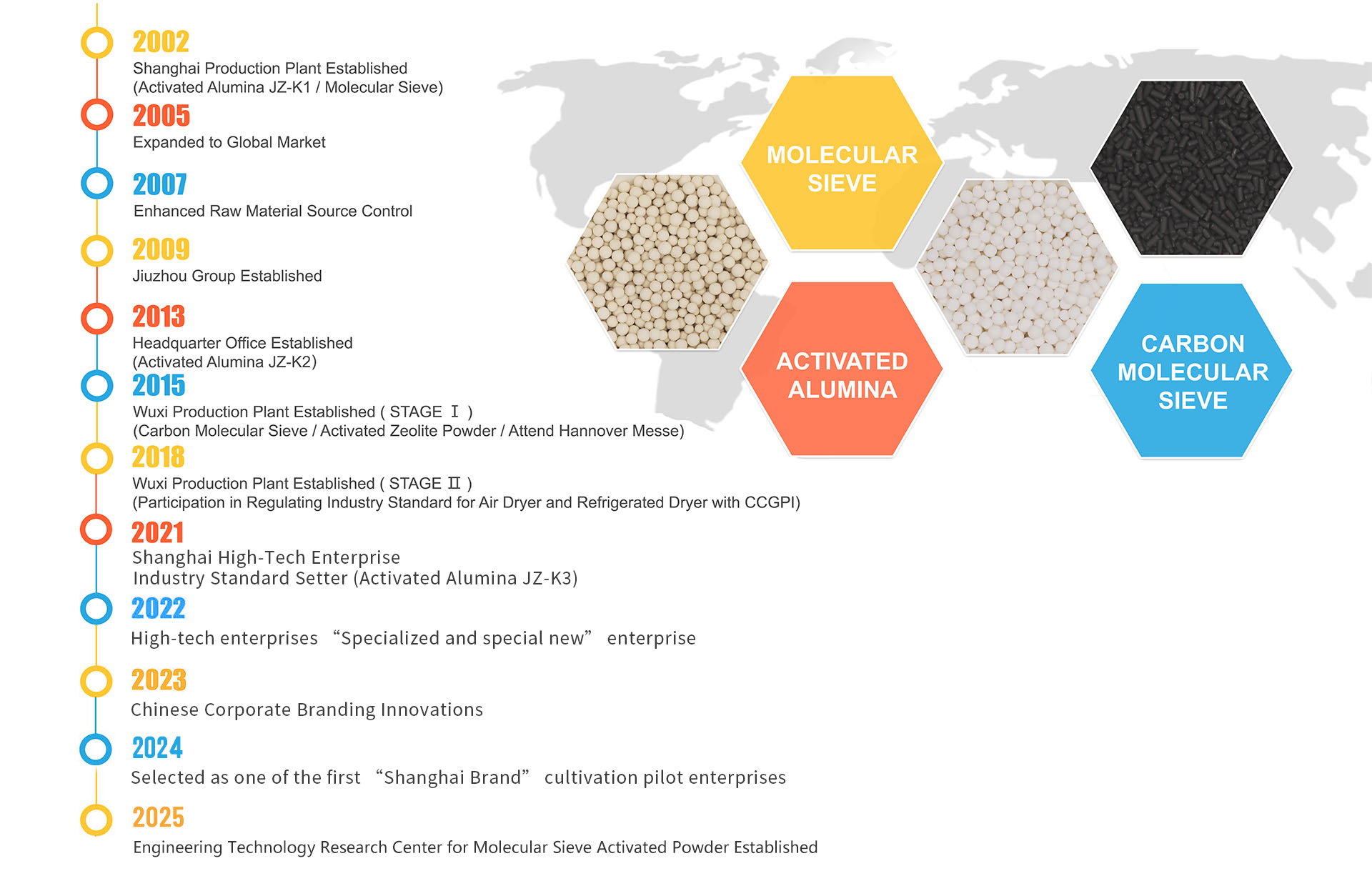
Shanghai Jiuzhou Chemicals Co., Ltd.
Located in the biggest Economic Development city Shanghai. Over the years Jiuzhou has always adhered to the "quality control, innovation" principles, committed to the development, research, manufacturing of high quality innovative chemical products. Our main products includes various molecular sieve powders, molecular sieves, activated powder, activated alumina, aluminum oxide catalysts, different types of alumina packing and ceramic balls, sodium silicates, aluminum hydroxide, zeolite 4A, sodium carbonates, SLES, etc. Our all products passed the ISO9001: 2008 quality management system certification and TUV & SGS Certification.
Jiuzhou factory has a professional and world-class research team and experts in chemical product resources. We use the best in international production technology and professional production equipment, constructed in line with national standards and by the large multipurpose plant monitoring, analysis instrument composition the central laboratory. And in quality inspection aspect Jiuzhou have controlled and that products meet international standards.
Jiuzhou's technical strength and industry reputation are leading the industry in the field of desiccants, with senior experts and technical reserves, automated multi-functional production workshops, and a central laboratory and dynamic laboratory composed of large-scale monitoring and analysis instruments. It is in quality control And in terms of supporting services, a set of scientific and complete operating system has been established. Joozeo products are exported to all parts of the world, and have established a distribution network in the United States, Southeast Asia, Japan, Europe, North and South America, the Middle East and other places to provide partners with high-quality products, customized services, and more energy-saving and environmentally friendly adsorption solutions.
Deep Dive: Molecular Sieve Oxygen in Off-Gas Purification
In modern industrial manufacturing, off-gas purification is no longer merely a regulatory compliance task; it is a core operational strategy directly linked to energy efficiency, resource recovery, and environmental sustainability. Off-gas streams, whether originating from chemical plants, petrochemical refineries, steel mills, or waste treatment facilities, often carry high concentrations of hazardous materials, volatile organic compounds (VOCs), carbon monoxide (CO), sulfur compounds, and nitrogen oxides (NOx). To neutralize these pollutants effectively, oxygen-enriched environments are highly required. This is where Molecular Sieve Oxygen Generation steps in as a game-changing technology.
Using Pressure Swing Adsorption (PSA) or Vacuum Pressure Swing Adsorption (VPSA) systems, specialized zeolites selectively separate nitrogen from ambient air, leaving a stream of concentrated oxygen (typically 90% to 95%). This on-site generated oxygen is then injected into off-gas treatment systems, drastically improving combustion kinetics, reducing total gas volume, and eliminating secondary nitrogen oxide emissions that typically occur when using ambient air for oxidation.
Did You Know? Replacing ambient air with high-purity molecular sieve oxygen in catalytic and thermal oxidizers can reduce exhaust gas volume by up to 70%, dramatically shrinking downstream equipment footprint and lowering fuel consumption.
Industrial Applications of Oxygen-Enriched Off-Gas Purification
1. VOC and HAP Destruction in Regenerative Thermal Oxidizers (RTO)
Volatile Organic Compounds (VOCs) and Hazardous Air Pollutants (HAPs) are common byproducts of chemical synthesis, printing, painting, and refining. Thermal and catalytic oxidation are the primary methods used to convert these pollutants into harmless carbon dioxide and water vapor. However, when using ambient air (which is 78% nitrogen) to supply the oxygen needed for combustion, the inert nitrogen absorbs significant thermal energy, requiring excess fuel consumption to maintain the oxidizer's operating temperature (often exceeding 800°C).
By utilizing oxygen generated on-site via molecular sieves, the combustion process is optimized. The removal of nitrogen from the combustion air increases the flame temperature and reaction kinetics, enabling complete destruction of VOCs at lower fuel-input rates. Furthermore, because nitrogen is absent, the formation of thermal NOx is prevented, solving one environmental issue without creating another.
2. Sulfur Recovery Units (SRU) & The Claus Process
In oil refineries and natural gas processing plants, hydrogen sulfide (H2S) must be removed from sour gas streams and converted into elemental sulfur. This is traditionally done via the Claus Process, which relies on burning a portion of the H2S to SO2, which then reacts with the remaining H2S over a catalyst. When air is used for this combustion, the massive volume of nitrogen acts as a bottleneck, limiting the throughput of the entire sulfur recovery unit.
Oxygen enrichment using molecular sieve VPSA technology allows operators to inject high-purity oxygen directly into the Claus burner. This increases the capacity of the SRU by up to 30% to 50% without requiring major capital investments in new reactor vessels. It also improves thermal stability and ensures that trace hydrocarbons in the acid gas are fully destroyed, preventing catalyst fouling downstream.
3. Advanced Oxidation & Ozone Generation for Wet Scrubbing
Ozone (O3) is one of the most powerful oxidants available for gas purification. Wet scrubbers often utilize ozone dissolved in water to oxidize refractory pollutants such as NOx, elemental mercury, and odor-causing compounds present in industrial off-gases. To produce ozone efficiently, high-purity oxygen is required as the feed gas for corona discharge ozone generators.
Oxygen molecular sieves, such as Jiuzhou's JZ-OM series, provide the consistent, high-purity, and dry oxygen stream required by ozone generators. Any moisture or nitrogen impurities in the feed gas can drastically reduce ozone yield and lead to the formation of corrosive nitric acid inside the generator cells. Using premium zeolites ensures optimal performance and longevity of the ozone system.
4. Hazardous Waste Incineration and Gasification
Incineration of hazardous waste, medical waste, and municipal solid waste produces complex off-gas containing dioxins, furans, and heavy metals. Operating the combustion chambers with molecular sieve oxygen enrichment guarantees that temperatures remain high enough to fully decompose complex chlorinated organic compounds. It also reduces the total volume of flue gas that must be treated by baghouses, scrubbers, and carbon beds, significantly lowering the capital cost of air pollution control systems.
Commercial Status & Market Trends
The global market for industrial gas purification and on-site oxygen generation is experiencing rapid growth, driven by three major factors:
- Decarbonization & Net-Zero Targets: Industrial operators are under pressure to reduce carbon footprints. On-site oxygen generation via VPSA systems eliminates the carbon emissions associated with the liquefaction and transportation of liquid oxygen (LOX) via heavy trucks.
- Economic Optimization: While liquid oxygen delivery involves ongoing operational expenses and logistics risks, VPSA systems using molecular sieves represent a one-time capital expenditure with low operating costs, primarily limited to the electricity required for blowers and vacuum pumps.
- Stricter Local Emission Standards: Regulatory bodies worldwide are lowering allowable limits for NOx, SOx, and VOC emissions. This forces facilities to upgrade their off-gas treatment units, often choosing oxygen enrichment as the most cost-effective path to compliance.
Choosing the Right Molecular Sieve for Oxygen Systems
The performance of a PSA or VPSA oxygen generator depends heavily on the physical and chemical properties of the molecular sieve adsorbent. When selecting a molecular sieve for off-gas purification oxygen systems, several parameters must be carefully evaluated:
Nitrogen Adsorption Capacity & Selectivity
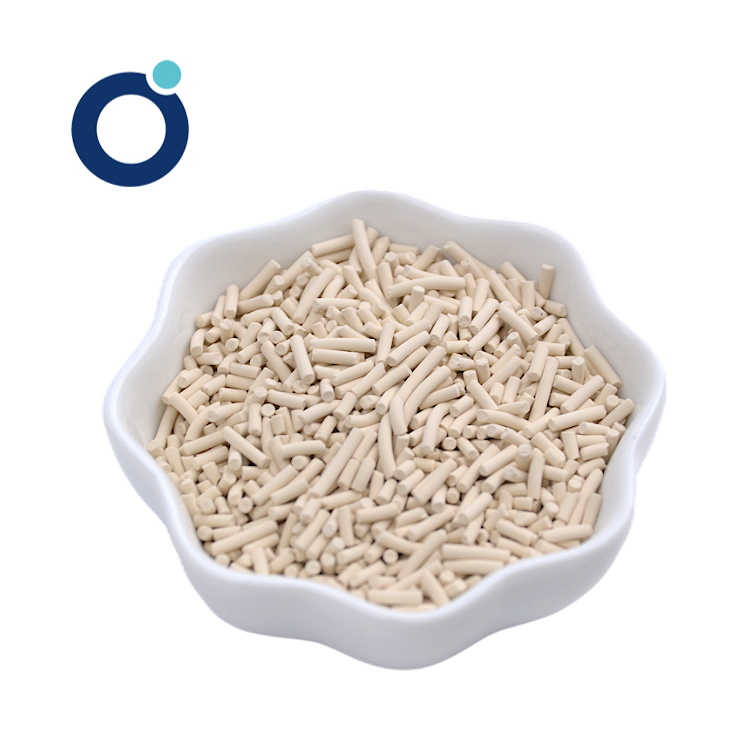
The primary function of the molecular sieve is to adsorb nitrogen while allowing oxygen to pass through. Lithium-exchanged zeolites (such as LiX type) offer significantly higher nitrogen capacity and nitrogen/oxygen selectivity at low pressures compared to traditional sodium or calcium-based zeolites. This translates to smaller adsorber vessels, lower power consumption, and higher overall system efficiency.
Mechanical Strength & Attrition Resistance
PSA and VPSA systems operate under continuous pressure cycling, which subjects the molecular sieve beads to mechanical stress. Low-quality adsorbents can break down over time, creating dust that clogs valves, filters, and downstream piping. High crush strength and low attrition rate are critical for ensuring a service life of 10 years or more.
Moisture Sensitivity and Pre-Bed Protection
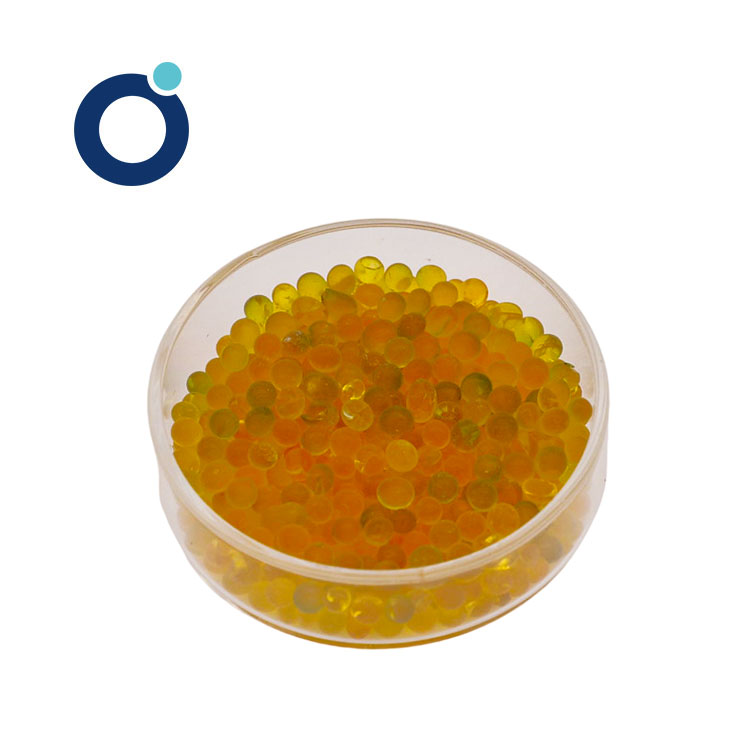
Zeolites have a strong affinity for water. If moisture reaches the primary oxygen-generating molecular sieve, it will occupy the active adsorption sites and permanently reduce nitrogen capacity. Therefore, a robust system design includes a pre-bed layer of silica gel (such as JZ-WSG or JZ-SG-O) or activated alumina to remove moisture and trace carbon dioxide before the feed gas enters the active zeolite layer.
Complete Portfolio of Adsorption & Purification Products