The Critical Role of Molecular Sieve Separation in Refrigerant Dehydration
In modern refrigeration and air conditioning systems, moisture is one of the most hazardous contaminants. Even minute traces of water can lead to catastrophic system failures. When moisture enters a refrigeration loop, it reacts with the refrigerant and compressor lubricants (such as polyolester (POE) or polyalkylene glycol (PAG) oils) to undergo hydrolysis. This reaction generates highly corrosive hydrofluoric and hydrochloric acids. These acids attack metallic components, degrade motor windings in hermetic compressors, and cause copper plating on bearing surfaces.
Furthermore, free water will freeze at the expansion valve or capillary tube orifices, creating physical blockages that disrupt refrigerant flow and cause system downtime. To prevent these mechanical and chemical failures, high-efficiency desiccant systems are integrated directly into the liquid or suction lines. Among all available technologies, molecular sieve separation represents the gold standard for refrigerant drying.
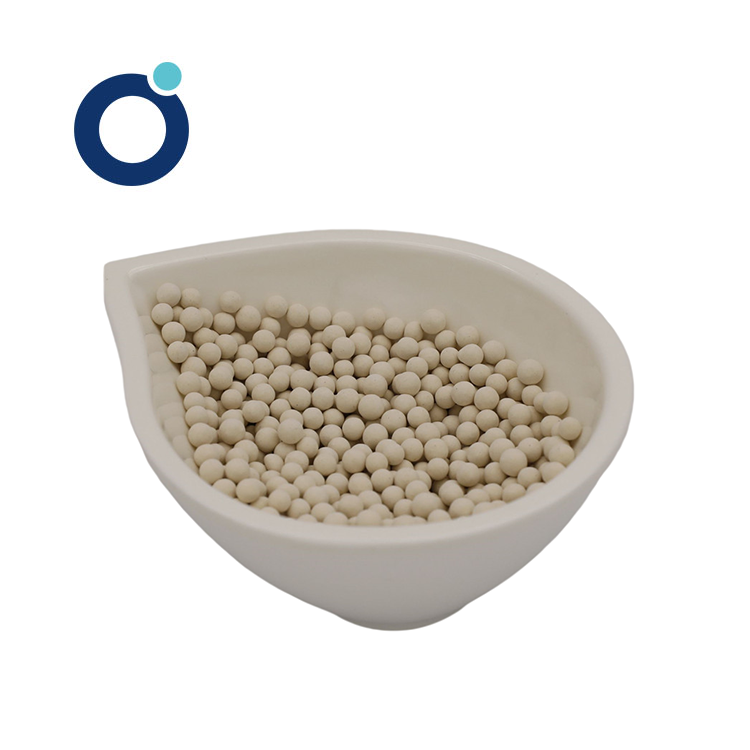
"Molecular sieve separation utilizes crystalline aluminosilicates with highly uniform pore structures. By selecting precise pore sizes (typically 3 Ångströms), these materials selectively adsorb water molecules while completely excluding refrigerant molecules, ensuring optimal drying performance without refrigerant decomposition."
Why Zeolite Molecular Sieves Outperform Traditional Desiccants
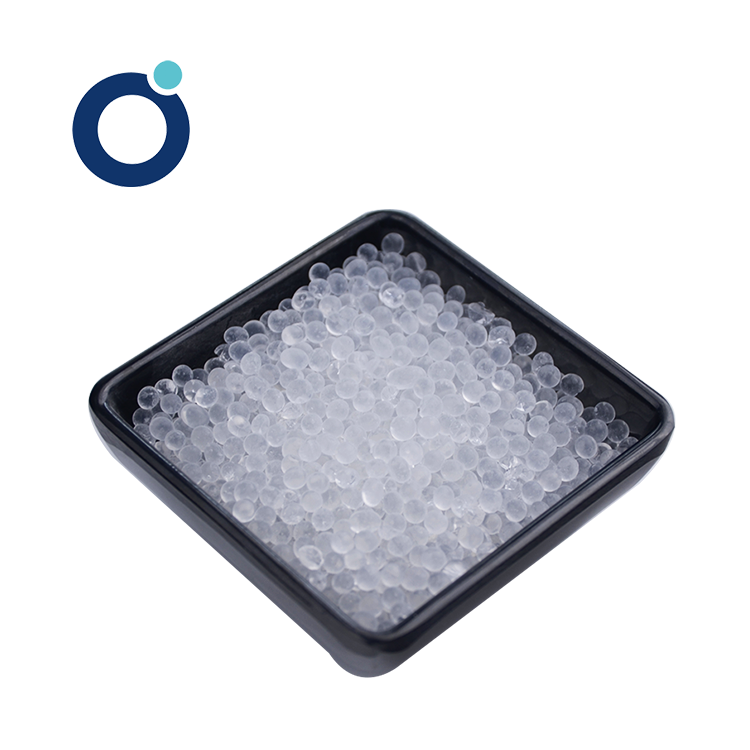
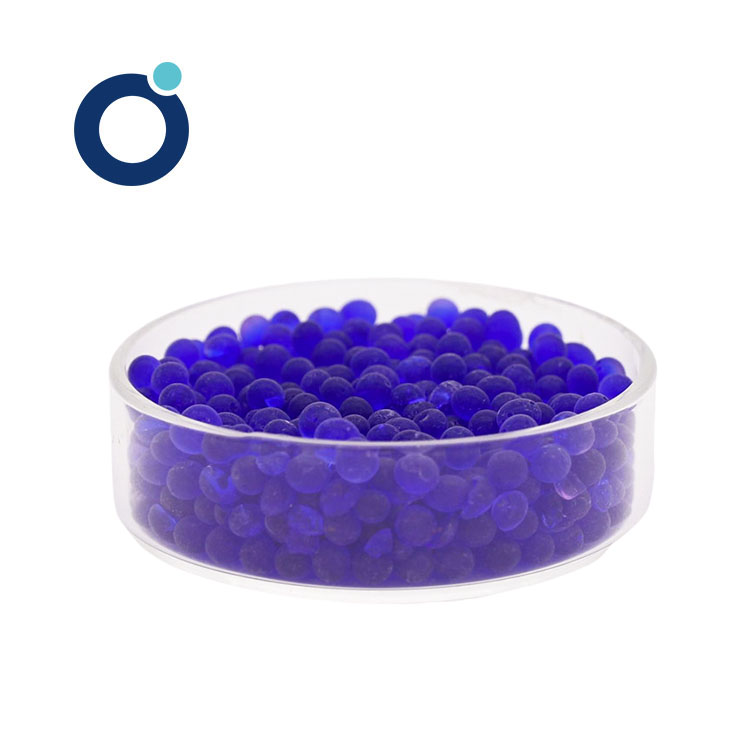
Historically, silica gel and activated alumina were widely used for general gas drying. However, in modern refrigeration circuits, these materials fall short. Silica gel relies on physical capillary condensation, which exhibits poor water retention at low relative humidity and elevated temperatures. Activated alumina, while chemically active, can catalyze the decomposition of modern refrigerants under high-temperature conditions.
Molecular sieves, specifically synthetic zeolites, offer key performance advantages:
- High Adsorption Capacity at Low Partial Pressure: Unlike silica gel, molecular sieves can reduce the moisture level in a refrigerant loop to under 10 ppm, even when the system is operating at high temperatures.
- Size Exclusion Selectivity: A pore size of 3 Å allows the water molecule (kinetic diameter of approximately 2.65 Å) to enter the internal crystalline cavities, while excluding common refrigerants like R-134a, R-410A, and HFO-1234yf, which have kinetic diameters larger than 4.0 Å.
- Thermal Stability: Zeolite frameworks remain structurally intact at temperatures exceeding 200°C, ensuring consistent performance during high-thermal load phases of compressor cycles.
Commercial & Industrial Landscape: The Evolution of Refrigerants
The global refrigeration industry is undergoing a monumental shift driven by environmental regulations. The phase-down of Hydrofluorocarbons (HFCs) under the Kigali Amendment to the Montreal Protocol and European F-Gas regulations has forced a transition towards low Global Warming Potential (GWP) alternatives. This includes Hydrofluoroolefins (HFOs) like R-1234yf and R-1234ze, as well as natural refrigerants such as Carbon Dioxide (R-744), Isobutane (R-600a), and Propane (R-290).
This transition dramatically impacts desiccant requirements. HFO refrigerants, due to their unsaturated double-bond molecular structure, are chemically less stable than traditional HFCs. Standard desiccants can act as catalysts, triggering the isomerization or decomposition of HFOs, which leads to the formation of acidic byproducts and carbonaceous sludge. Consequently, modern molecular sieve formulations must be chemically inert toward these sensitive refrigerants.
Desiccant Compatibility with Synthetic Lubricants
The shift from mineral oils to synthetic lubricants (POE and PAG) has further complicated moisture control. Synthetic lubricants are highly hygroscopic, absorbing water from the atmosphere at a rate many times higher than mineral oils. Once water is bound to POE or PAG oils, it cannot be easily removed by standard filtration. The molecular sieve must possess a high affinity for water to break the weak chemical bonds between dissolved water and the polar groups of the synthetic oil, extracting the moisture back into the zeolite crystalline matrix.
About Shanghai Jiuzhou Chemicals
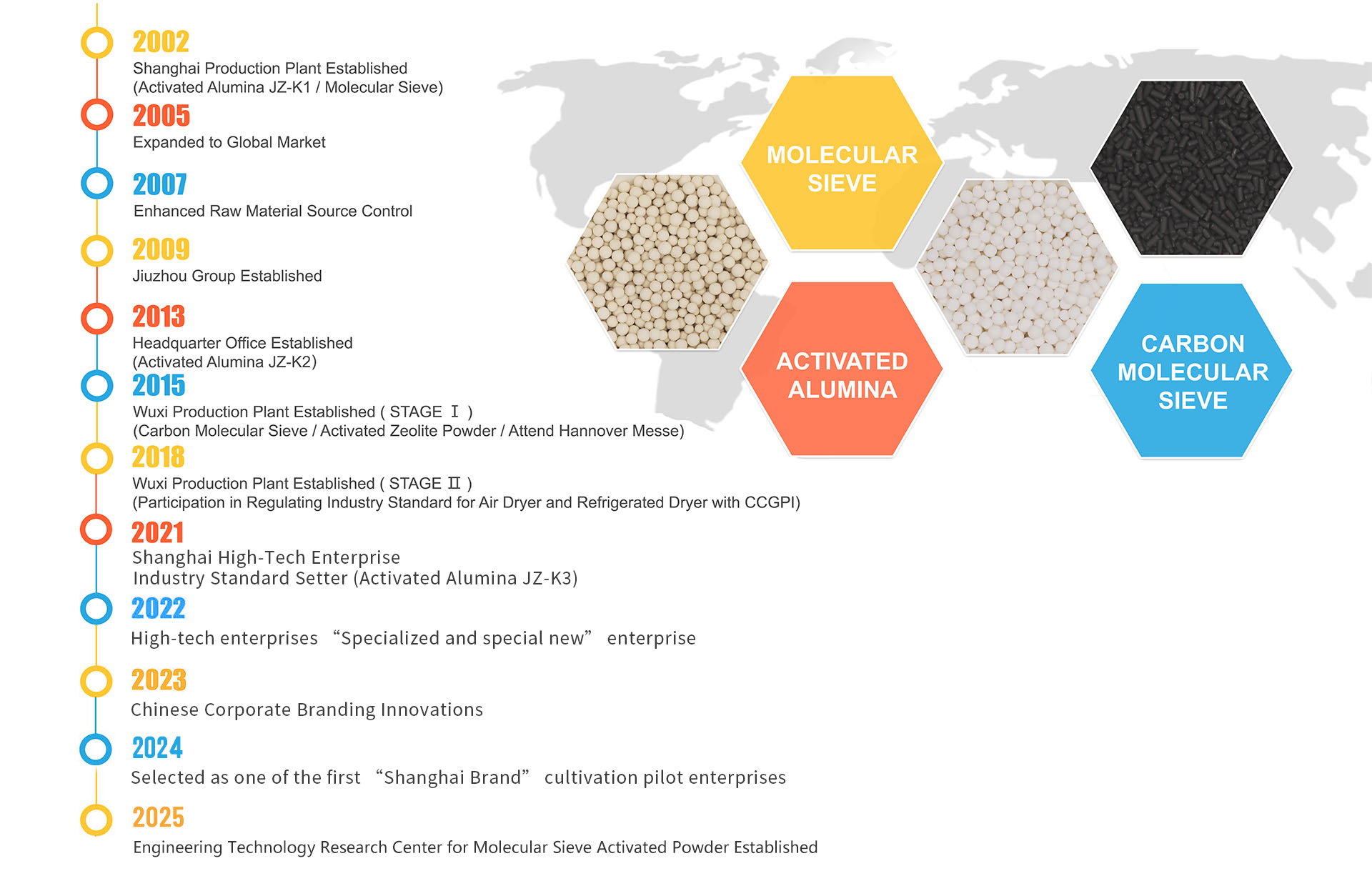
Shanghai Jiuzhou Chemicals Co., Ltd. is located in Shanghai, the largest economic development city in China. Over the years, Jiuzhou has always adhered to the "quality control, innovation" principles, committed to the development, research, and manufacturing of high-quality, innovative chemical products. Our main products include various molecular sieve powders, molecular sieves, activated powder, activated alumina, aluminum oxide catalysts, different types of alumina packing and ceramic balls, sodium silicates, aluminum hydroxide, zeolite 4A, sodium carbonates, SLES, etc. All of our products have passed the ISO9001: 2008 quality management system certification and TUV & SGS Certification.
The Jiuzhou factory boasts a professional, world-class research team and experts in chemical product resources. We utilize the finest international production technology and professional production equipment, constructed in line with national standards. Our operations are supported by a large-scale, multipurpose plant monitoring system and a central laboratory equipped with advanced analysis instruments. In the aspect of quality inspection, Jiuzhou maintains rigorous control to ensure all products meet international standards.
Jiuzhou's technical strength and industry reputation lead the field of desiccants. With senior experts, deep technical reserves, automated multi-functional production workshops, and dynamic laboratories, we have established a scientific and complete operating system. Joozeo products are exported to all parts of the world. We have established a robust distribution network in the United States, Southeast Asia, Japan, Europe, North and South America, the Middle East, and other regions to provide partners with high-quality products, customized services, and energy-saving, environmentally friendly adsorption solutions.
Deep-Dive Application Scenarios of Molecular Sieves in Refrigeration
1. Automotive Air Conditioning (MAC) Systems
In passenger vehicles, space is limited, and components are subjected to continuous mechanical vibrations and drastic temperature variations. Modern automotive AC systems have transitioned from R-134a to R-1234yf. The molecular sieve beads used in MAC receiver-driers must possess exceptional physical strength (crush strength) to prevent attrition and dust formation. If the beads degrade into fine dust, they can bypass the filter mesh, clog the expansion valve, and damage the compressor. Specialized zeolites with optimized binders are deployed to ensure long-term durability under constant road vibration.
2. Commercial Cold Chains & Supermarket Refrigeration
Supermarket display cases and walk-in freezers operate continuously, handling large volumes of refrigerant. These systems require filter-driers with high water capacity and low flow resistance. Molecular sieves are often formulated into solid core blocks, combining zeolite beads with a small percentage of binder to maintain high mechanical integrity while offering high-speed moisture absorption. This ensures the refrigerant remains dry even during rapid system load changes.
3. Stationary Heat Pumps
Residential and industrial heat pumps operate in bidirectional cycles (heating and cooling), exposing the filter-drier to reversing refrigerant flows. In heating mode, discharge temperatures can exceed 100°C. The molecular sieve must maintain its water retention capability at these elevated temperatures, preventing the release of previously adsorbed water back into the system (a phenomenon known as thermal desorption).
4. Cryogenic Separation and Industrial Gas Liquefaction
In large-scale industrial gas processing, such as LNG liquefaction or cryogenic oxygen production, gases must be dried to dew points below -70°C. Molecular sieve beds are used in thermal swing adsorption (TSA) configurations. The gas passes through the molecular sieve bed to achieve deep dehydration before entering the cryogenic heat exchangers, preventing ice formation that would otherwise block the heat exchanger channels.
Technical Specifications and Selection Criteria for Molecular Sieves
Selecting the correct molecular sieve requires evaluating several critical physical and chemical properties:
- Pore Size Control: Typically 3 Å is selected for HFC/HFO systems. A pore size of 4 Å may be utilized for specific hydrocarbon refrigerants (like Propane R-290) if the molecular geometry allows, though 3 Å remains safer to prevent co-adsorption.
- Crush Strength: Measured in Newtons (N), high crush strength prevents bead fracture under pressure pulses and mechanical vibration.
- Bulk Density: Higher bulk density allows for more active zeolite material to be packed into a fixed-volume filter-drier shell, maximizing water capacity.
- Attrition Rate: Low attrition rates ensure that the rolling action of beads during flow fluctuations does not produce fine dust.
Future Trends: Smart Adsorbents and Sustainable Manufacturing
The future of molecular sieve technology lies in the development of binderless zeolites, which offer up to 20% higher adsorption capacity per unit volume by converting the clay binder into active zeolite structure. Additionally, manufacturers are focusing on reducing the carbon footprint of zeolite synthesis by utilizing renewable energy sources for the high-temperature calcination process and sourcing silica and alumina from industrial byproducts.