Featured Refrigerant Dehydrator Solutions
Company Profile & Global Strength
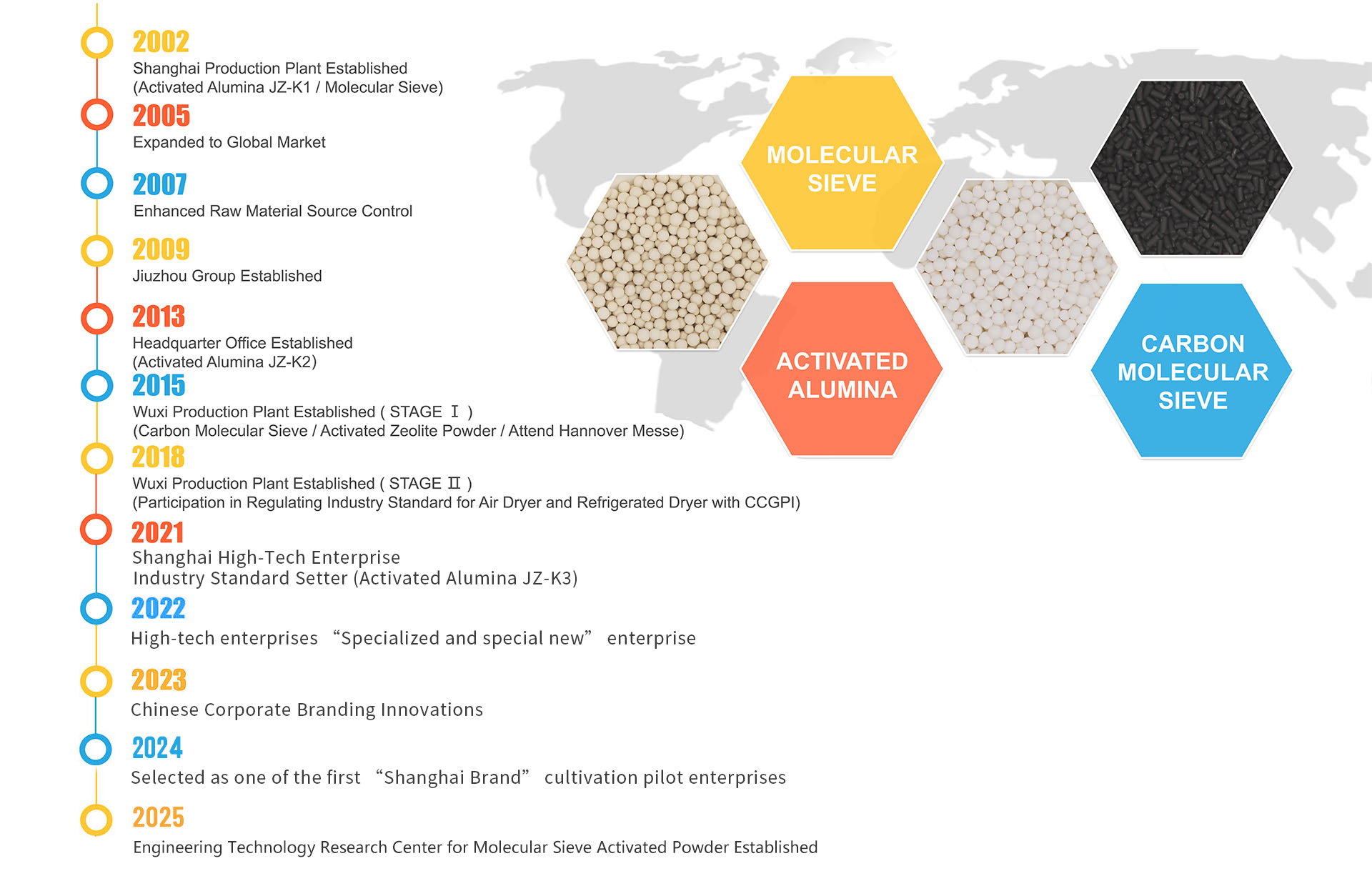
Shanghai Jiuzhou Chemicals Co., Ltd. Located in the biggest Economic Development city Shanghai. Over the years Jiuzhou has always adhered to the "quality control, innovation" principles, committed to the development, research, manufacturing of high quality innovative chemical products. Our main products includes various molecular sieve powders, molecular sieves, activated powder, activated alumina, aluminum oxide catalysts, different types of alumina packing and ceramic balls, sodium silicates, aluminum hydroxide,zeolite 4A, sodium carbonates, SLES, etc. Our all products passed the ISO9001: 2008 quality management system certification and TUV & SGS Certification.
Jiuzhou factory has a professional and world-class research team and experts in chemical product resources. We use the best in international production technology and professional production equipment, constructed in line with national standards and by the large multipurpose plant monitoring, analysis instrument composition the central laboratory. And in quality inspection aspect Jiuzhou have controlled and that products meet international standards.
Jiuzhou's technical strength and industry reputation are leading the industry in the field of desiccants, with senior experts and technical reserves, automated multi-functional production workshops, and a central laboratory and dynamic laboratory composed of large-scale monitoring and analysis instruments. It is in quality control And in terms of supporting services, a set of scientific and complete operating system has been established Joozeo products are exported to all parts of the world, and have established a distribution network in the United States, Southeast Asia, Japan, Europe, North and South America, the Middle East and other places to provide partners with high-quality products, customized services, and more energy-saving and environmentally friendly adsorption solutions.
The Science & Industry Dynamics of Refrigerant Dehydration
Why Refrigerant Drying is Critical to HVAC&R Systems
In modern refrigeration, air conditioning, and heat pump systems, moisture is one of the most destructive contaminants. Water can enter the system through various pathways, including atmospheric humidity during installation or servicing, leaks in the low-pressure side of the system, and the slow degradation of polymeric materials and lubricating oils. Even trace amounts of moisture can lead to catastrophic system failures:
- Ice Blockage: Freezing temperatures inside expansion valves and capillary tubes cause water to crystallize, blocking the flow of refrigerant and halting the cooling cycle entirely.
- Acid Formation: Refrigerants (especially modern hydrofluorocarbons [HFCs] and hydrofluoroolefins [HFOs]) can react with water and synthetic lubricant oils (such as Polyolester [POE] or Polyalkylene Glycol [PAG]) at elevated compressor temperatures. This hydrolysis produces highly corrosive hydrofluoric acid (HF) and organic acids.
- Component Corrosion & Copper Plating: The generated acids corrode metallic components, dissolving copper from tubing and depositing it onto hot surfaces like compressor bearings and valves. This leads to mechanical wear, reduced efficiency, and premature compressor burnout.
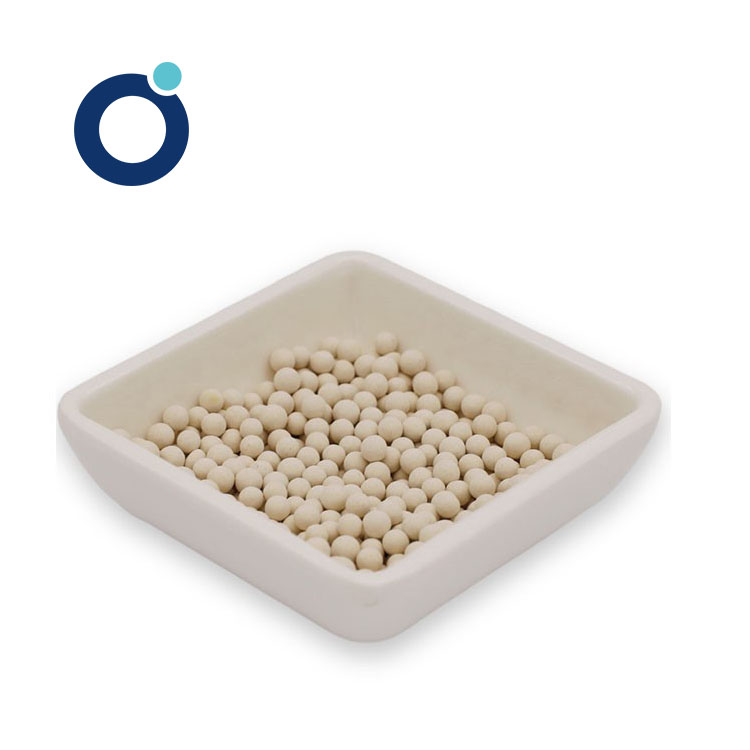
To combat this, molecular sieve zeolites are integrated into the filter drier. A molecular sieve is a crystalline aluminosilicate with a highly ordered, three-dimensional pore structure. By selecting the correct pore size—typically 3 Ångströms (3A)—the molecular sieve selectively adsorbs water molecules while excluding the larger refrigerant molecules, ensuring dry, clean, and stable system operation.
"The selection of the appropriate zeolite pore size is paramount. A pore size of 3A allows water molecules (diameter approx. 2.8 Å) to be rapidly adsorbed, while completely excluding refrigerant molecules like R-134a or R-32, preventing co-adsorption and subsequent chemical breakdown."
Deep-Dive Application Scenarios
Molecular sieve zeolites are engineered to meet the unique demands of distinct refrigeration sectors. Different systems impose varying physical and chemical stresses on the desiccant material:
1. Mobile Air Conditioning (MAC) Systems
Automotive air conditioning loops operate under extreme conditions. They are subjected to constant vibrations, road shocks, and rapid temperature fluctuations under the hood. Desiccants used in MAC systems (such as DuraChem CAM-20S and JooSorb ZA-40) must possess high mechanical strength and exceptional attrition resistance. If the zeolite beads break down under physical stress, they form fine dust that can clog expansion valves and damage compressor seals. Furthermore, MAC systems are transitioning from R-134a to R-1234yf, a low-GWP HFO refrigerant that is chemically more sensitive and requires highly compatible, non-reactive desiccants to prevent decomposition.
2. Commercial and Industrial Cold Storage
In large-scale commercial refrigeration—such as supermarket display cases, cold storage warehouses, and food processing facilities—refrigerant volumes are massive, and systems run continuously for decades. The filter driers in these systems must handle large water capacities and maintain low dew points over long operating cycles. High-capacity molecular sieves like JooSorb DS-120 are critical here, offering high water adsorption capacity even at low water partial pressures, ensuring the system remains bone-dry under varying load conditions.
3. Residential Air Conditioning and Heat Pumps
With the global push toward decarbonization, heat pumps and residential air conditioners are increasingly adopting natural refrigerants like Propane (R-290) or high-pressure HFC/HFO blends like R-32 and R-454B. These systems operate at high discharge temperatures. Zeolite desiccants must remain thermally stable and chemically inert, ensuring they do not catalyze the breakdown of refrigerants or synthetic oils under high thermal loads.
4. Hermetic Compressor Systems
In household refrigerators and freezers, the compressor is hermetically sealed, meaning it cannot be serviced without cutting the lines. The desiccant is designed to last the entire lifetime of the appliance (often 15 to 20 years). The molecular sieve must be highly stable, ensuring zero structural degradation and zero chemical reactivity with the refrigerant and oil over decades of continuous thermal cycling.
Commercial Status & Future Trends
The Global Transition to Low-GWP Refrigerants
The global HVAC&R industry is undergoing a massive regulatory shift driven by the Kigali Amendment to the Montreal Protocol and regional regulations like the European F-Gas Regulation. The goal is to phase down high-Global Warming Potential (GWP) hydrofluorocarbons (HFCs) like R-404A and R-134a, replacing them with eco-friendly alternatives. These alternatives include Hydrofluoroolefins (HFOs) such as R-1234yf and R-1234ze, as well as natural refrigerants like Carbon Dioxide (R-744), Ammonia (R-717), and Hydrocarbons like Propane (R-290).
This transition directly impacts desiccant technology. HFOs contain a double carbon-carbon bond, making them chemically more reactive than traditional HFCs. In the presence of moisture, trace catalysts, or incorrect pore-size desiccants (such as 4A zeolites), HFOs can undergo catalytic reactions, leading to desiccant degradation and acid formation. Consequently, the demand for high-purity, specialized 3A molecular sieves has surged. Modern formulations must be strictly controlled to ensure no active catalytic sites exist on the zeolite framework, guaranteeing compatibility with next-generation green refrigerants.
Demand for Energy Efficiency and System Longevity
Energy efficiency is a primary driver in modern HVAC&R design. Dry refrigerants optimize thermodynamic heat transfer efficiency. Moisture in the system can lead to micro-films of water or ice on heat exchanger surfaces, acting as an insulating barrier and reducing heat transfer coefficient. By utilizing high-performance molecular sieves, manufacturers can ensure optimal heat exchanger efficiency, reducing energy consumption and lowering the carbon footprint of operating systems.
Manufacturing Innovations: Green Chemistry and Customization
Leading manufacturers like Shanghai Jiuzhou Chemicals are investing heavily in green manufacturing processes for zeolites. This includes optimizing the thermal activation process to reduce energy consumption during production, recycling process water, and utilizing eco-friendly, clay-free binders that enhance physical strength without compromising adsorption capacity. Customization is also a growing trend; OEMs require tailored bead sizes, optimized pore distributions, and specific mechanical properties to fit compact, modern filter drier designs.