Featured Adsorbents for Hydrogen Peroxide Solvent Dehydration
1. Industrial Status of Solvent Drying in Hydrogen Peroxide Production
Hydrogen peroxide (H2O2) is one of the most versatile and environmentally friendly chemicals in the world. Widely used in pulp bleaching, textile processing, wastewater treatment, chemical synthesis, and high-tech semiconductor manufacturing, the demand for high-purity hydrogen peroxide is growing exponentially. The dominant technology for industrial hydrogen peroxide production is the Anthraquinone Auto-oxidation (AO) process. This process cycles a working solution consisting of anthraquinone derivatives dissolved in a complex mixture of organic solvents through hydrogenation and oxidation stages.
A critical challenge in the AO process is the management of water within the working solution loop. Water is introduced through various channels, including raw material impurities, process steam, and chemical side-reactions. If water is allowed to accumulate, it leads to catalyst deactivation in the hydrogenation reactor, accelerates the hydrolytic degradation of precious working solvents, causes phase separation issues, and significantly degrades the overall safety and yield of the production plant. Consequently, highly efficient solvent drying systems are mandatory. Among all available technologies, molecular sieves have emerged as the industry gold standard for deep dehydration of working solvents in hydrogen peroxide production.
Did you know? In semiconductor-grade hydrogen peroxide production, even parts-per-billion (ppb) levels of moisture and organic impurities can ruin silicon wafer yields. Ultra-deep drying of working solvents using specialized zeolite molecular sieves is the foundational step to achieving electronic-grade purity.
The Crucial Role of Molecular Sieves in the AO Loop
During the AO cycle, the working solution (WS) undergoes continuous hydrogenation and oxidation. In the extraction column, hydrogen peroxide is extracted from the organic working solution using deionized water. This step leaves the organic solvent saturated with water. Before the working solution can be recycled back to the hydrogenation stage, this dissolved and entrained water must be removed. Standard mechanical separation and coalescing filters can only remove free water, leaving the solvent saturated with dissolved moisture (often between 500 to 2000 ppm). Molecular sieves are deployed in dehydration columns to reduce this moisture content to less than 10 ppm, protecting the sensitive palladium or nickel catalysts from water poisoning.
2. Technical Mechanisms: Why Zeolites Outperform Traditional Desiccants
Traditional desiccants such as silica gel or standard activated alumina have historically been used for solvent drying. However, they lack the structural selectivity and chemical stability required for the complex organic matrices of the hydrogen peroxide working solution. The working solution typically contains heavy aromatics (e.g., C9-C10 alkylbenzenes) and polar solvents like trioctyl phosphate (TOP) or diisobutyl carbinol (DIBC). Standard porous desiccants co-adsorb these valuable solvent molecules along with water, leading to rapid pore clogging, high solvent loss, and premature desiccant degradation.
Synthetic zeolite molecular sieves solve this problem through precise pore-size engineering. By utilizing 3A (pore aperture ~3 Å) or 4A (pore aperture ~4 Å) molecular sieves, the drying process relies on steric exclusion:
- Kinetic Exclusion of Solvents: The kinetic diameter of water is approximately 2.65 Å, allowing it to easily enter the crystalline pore network of 3A and 4A molecular sieves. Conversely, the kinetic diameters of solvents like alkylbenzenes (>5.8 Å) and trioctyl phosphate are much larger, preventing them from entering the pores.
- High Adsorption Capacity at Low Partial Pressure: Unlike silica gel, molecular sieves exhibit a highly localized electrostatic field within their crystalline cavities, enabling them to maintain high water adsorption capacities even at extremely low water concentrations (ppm levels) and elevated temperatures.
- Chemical Inertness: High-quality molecular sieves are chemically inert to the active anthraquinones and hydrogen peroxide precursors, preventing unwanted catalytic side-reactions or solvent decomposition during the drying cycle.
3. Deep Application Scenarios & Process Design
Implementing molecular sieves in a hydrogen peroxide plant requires precise engineering of the adsorption and regeneration cycles. Typically, a multi-bed system is utilized to ensure continuous operation. While one or more beds are in the active adsorption (drying) phase, another bed undergoes thermal regeneration.
Liquid-Phase Adsorption Columns
The wet working solution is pumped downward through a vertical column packed with molecular sieve beads (typically 1.6mm to 3.2mm or 8x12 mesh). Downward flow minimizes fluidization of the bed, reducing mechanical attrition and dust generation. The contact time (Empty Bed Contact Time - EBCT) is carefully calculated based on the solvent viscosity, temperature, and target moisture levels. Modern plants optimize this process to achieve residual water levels below 5 ppm, which dramatically extends the lifetime of the hydrogenation catalyst.
Thermal Swing Adsorption (TSA) Regeneration
Once the molecular sieve bed reaches its breakthrough capacity, it must be regenerated. This is achieved through a Thermal Swing Adsorption (TSA) cycle. A dry slipstream of nitrogen gas or vaporized solvent is heated to temperatures between 200°C and 320°C and passed through the bed. The heat breaks the strong hydrogen bonds between the water molecules and the zeolite framework, vaporizing the water and sweeping it out of the system. The bed is then cooled back to operating temperature using a cool gas stream before being placed back online.
Key Design Tip: To prevent hydrothermal degradation of the zeolite structure, the initial heating ramp of the regeneration cycle must be carefully controlled to prevent liquid water from boiling inside the micropores, which can cause structural collapse over repeated cycles.
4. Global Market Trends: The Rise of Electronic-Grade H2O2
The global hydrogen peroxide market is experiencing a significant shift driven by the semiconductor industry. The manufacturing of microchips, memory modules, and flat-panel displays requires massive volumes of Ultra-High Purity (UHP) chemical reagents. Electronic-grade hydrogen peroxide (typically UP-SS or UP-SSS grade) requires metal ion impurities to be restricted to less than 10-100 parts per trillion (ppt) and organic carbon levels to be virtually non-existent.
To produce H2O2 of this caliber, the raw industrial-grade product must undergo intensive purification, but more importantly, the upstream AO synthesis process must be exceptionally clean. Any degradation of the working solution solvents generates micro-impurities that are highly difficult to separate downstream. By utilizing premium molecular sieves for continuous solvent drying, manufacturers can prevent the hydrolytic degradation of alkylphosphates into acidic sub-products. This directly reduces the extraction of metallic impurities from the stainless steel piping and reactor walls, ensuring a much cleaner crude H2O2 feedstock.
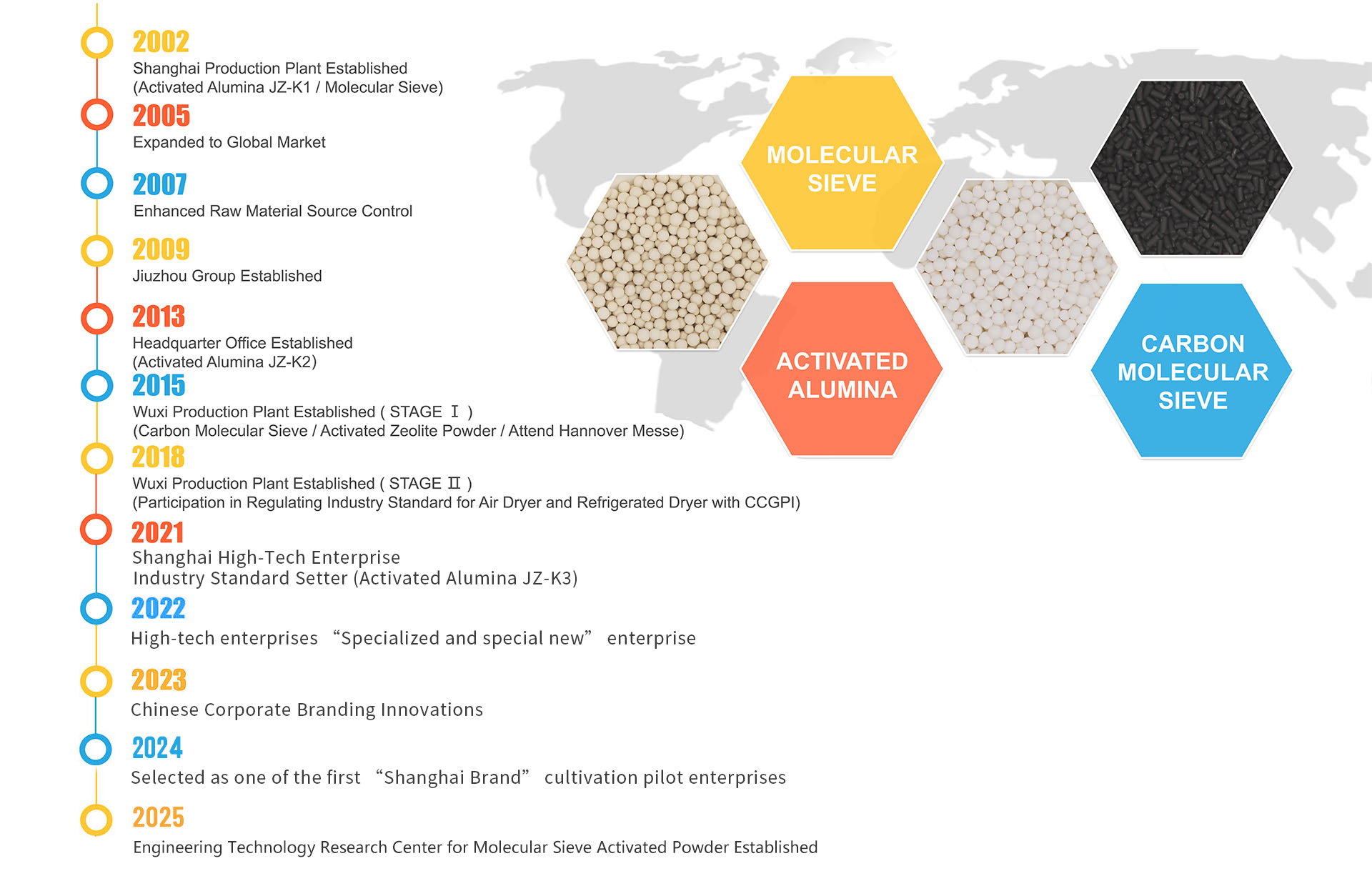
Our Manufacturing Scale & Global Reach
About Shanghai Jiuzhou Chemicals
Shanghai Jiuzhou Chemicals Co., Ltd. Located in the biggest Economic Development city Shanghai. Over the years Jiuzhou has always adhered to the “quality control, innovation “principles, committed to the development, research, manufacturing of high quality innovative chemical products. Our main products includes various molecular sieve powders, molecular sieves, activated powder, activated alumina, aluminum oxide catalysts, different types of alumina packing and ceramic balls, sodium silicates, aluminum hydroxide,zeolite 4A, sodium carbonates, SLES, etc. Our all products passed the ISO9001: 2008 quality management system certification and TUV & SGS Certification.
Jiuzhou factory has a professional and world-class research team and experts in chemical product resources.We use the best in international prodution technonlogy and professional production equipment, constructed in line with national standards and by the large multipurpose plant monitoring, analysis instrument composition the central laboratory. And in quality inspection aspect Jiuzhou have controlled and that products meet international standards.
Jiuzhou's technical strength and industry reputation are leading the industry in the field f desiccants, with senior experts and technical reserves, automated multi-unctional production workshops, and a central laboratory and dynamic laboratory composed of large-scale monitoring and analysis instruments. It is in quality control And in terms of supporting services, a set of scientific and complete operating system has been established Joozeo products are exported to all parts of the world, and have established a distribution network in the United States, Southeast Asia, Japan, Europe, North and South America, the Middle East and other places to provide parthers with high-quality products, customized services, and more eneray-saving and environmentally friendly adsorption solutions.
5. Operational Challenges & Maintenance of Molecular Sieve Units
While molecular sieves are highly effective, their operational lifespan depends heavily on proper system design and maintenance. Several common operational issues must be addressed by process engineers:
1. Prevention of Attrition and Fines Generation
Due to the continuous flow of high-viscosity working solutions and the high-temperature thermal shocks during regeneration, molecular sieve beads are subject to physical stress. If the mechanical crush strength of the zeolite is insufficient, the beads will break down, generating fine dust. These fines can escape the column, plug downstream filters, and contaminate the hydrogenation catalyst bed. Choosing molecular sieves with high crush strength and low attrition rate is crucial to avoiding this failure mode.
2. Managing Organic Fouling
Although the pore size of 3A molecular sieves excludes organic solvent molecules, the external surface of the zeolite crystals is still exposed to the working solution. Over time, heavy organic compounds or trace polymer degradation products can deposit on the outer surface of the beads, forming a "coke" layer that blocks access to the pores. This requires periodic high-temperature burn-offs or specialized solvent washes during the regeneration cycle to restore the adsorption capacity.
3. Minimizing Energy Consumption during Regeneration
Regenerating molecular sieves is an energy-intensive process due to the heat required to vaporize water and heat the large mass of the steel vessel and zeolite bed. Modern plants are adopting energy integration strategies, such as using waste heat from other parts of the H2O2 plant to preheat the regeneration gas, or employing vacuum-assisted thermal regeneration to lower the required desorption temperature.
6. Comprehensive Quality Standards and Selection Guide
Selecting the correct molecular sieve for hydrogen peroxide solvent drying involves evaluating several key technical parameters:
- Pore Size Consistency: Ensure the pore size distribution is tightly controlled (e.g., strictly 3.0 Å for 3A zeolites) to prevent co-adsorption of solvents.
- Static Water Adsorption Capacity: Typically should be greater than 20% by weight at 25°C and 50% relative humidity.
- Bulk Density: A higher bulk density ensures more active zeolite mass per unit volume of the adsorption column, maximizing the cycle time.
- Crush Strength: For liquid-phase columns, a crush strength of >50 N/bead for 1.6mm beads is highly recommended to withstand hydrostatic pressure.
By partnering with an ISO9001, TUV, and SGS certified manufacturer like Shanghai Jiuzhou Chemicals, chemical producers can ensure that every batch of molecular sieves meets these stringent performance metrics, guaranteeing stable, long-term operation of their hydrogen peroxide plants.
Complete Product Portfolio for H2O2 Production & Solvent Purification
Powdery Instant Sodium Silicate JZ-DSS-P for H2O2 Solvent Prep
Industrial Grade
DuraChem CSM-12 Catalyst Carrier for Hydrogen Peroxide
Catalyst Carrier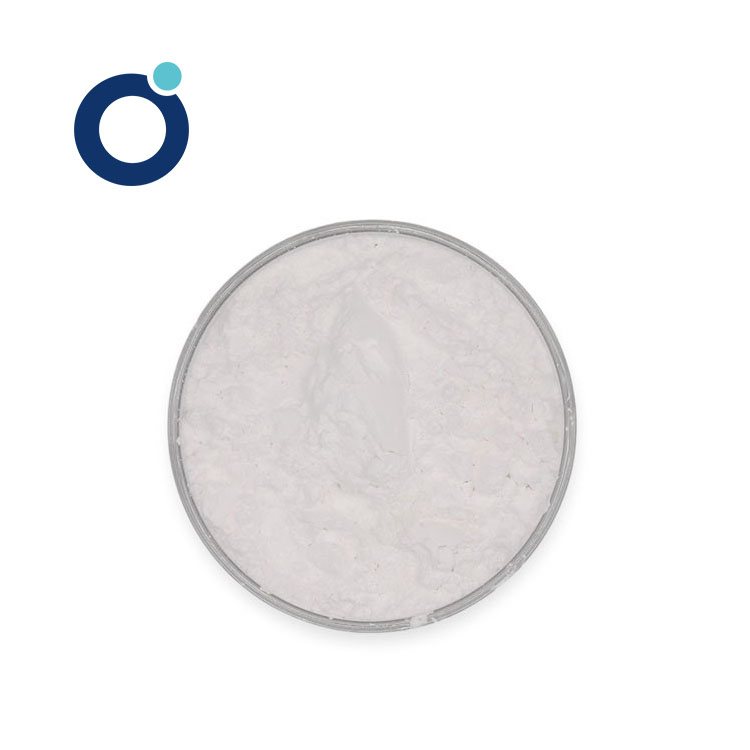
Molecular Sieve Powder JZ-ZT for H2O2 Solvent Drying
Zeolite Powder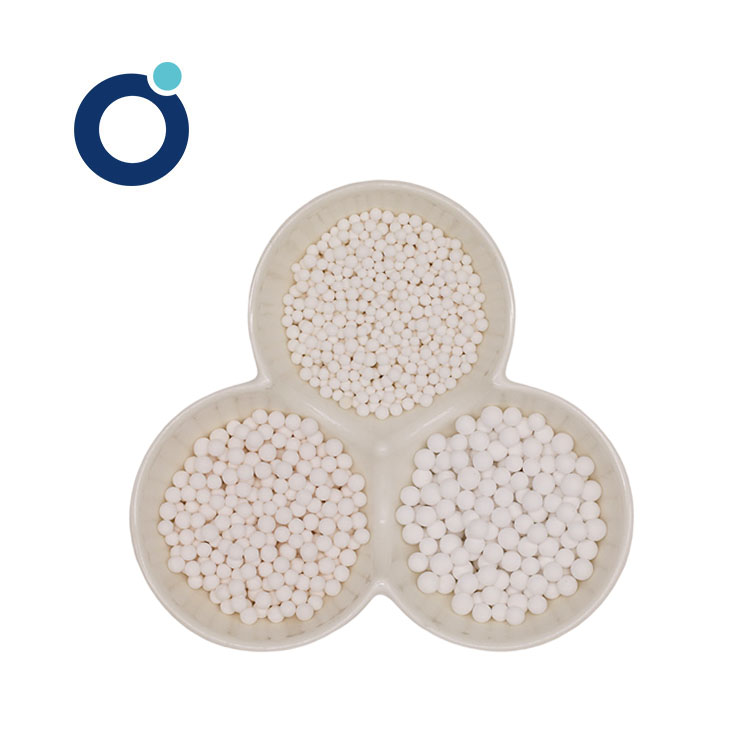
Activated Alumina JZ-K1 Solvent Deacidification & Drying
Adsorbent Media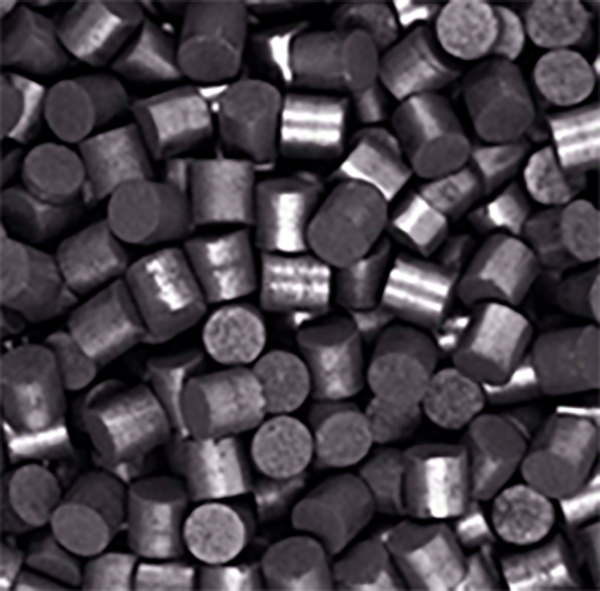
Duralyst DO-17T H2O2 Purification Catalyst
Specialty Catalyst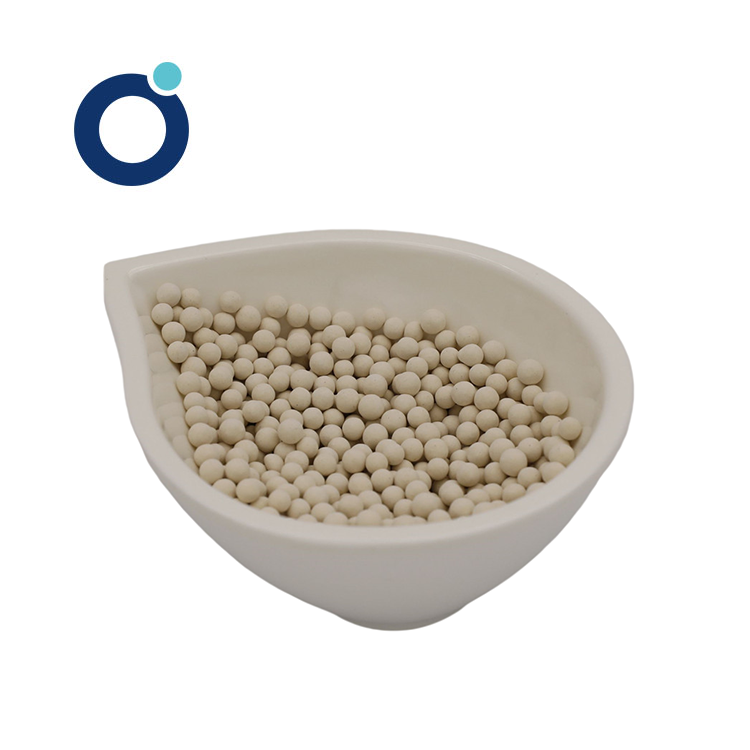
Molecular Sieve JZ-512H for Deep Solvent Dehydration
High Performance Zeolite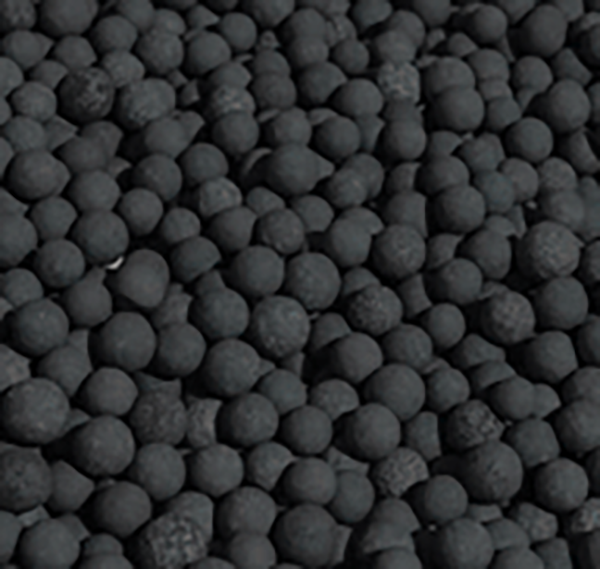
DuraChem CAM-10S Adsorbent for Working Solution
Custom Adsorbent