

In the field of adsorption drying, the “water adsorption” capacity is often the core indicator for measuring the performance of activated alumina. However, many people are not aware that this indicator is actually divided into “static water adsorption” and “dynamic water adsorption,” which have different meanings and offer distinct guidance for practical applications.
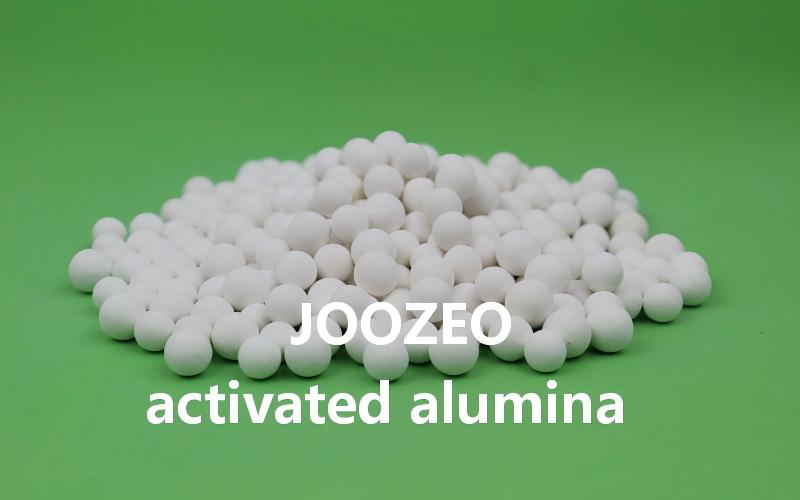
Static water adsorption refers to the amount of water adsorbed by the adsorbent when it reaches an equilibrium state under specific temperature and humidity conditions. It can be understood as the material’s ultimate water storage capacity in a “static, ideal” environment. In the actual operation of a adsorption dryer, if the working conditions remain stable, a higher static water adsorption value indicates a stronger ability of the adsorbent to capture moisture, resulting in a better dew point of the outlet gas. The JZ-K2 Activated Alumina, developed by Shanghai Jiuzhou, boasts a static water adsorption rate exceeding 20.5% , which is more than 20% higher than traditional products. This provides a solid material foundation for achieving deep drying.
However, the interior of an industrial adsorption dryer is a “dynamic” environment with continuous gas flow. Therefore, design engineers place greater emphasis on the dynamic water adsorption indicator. This refers to the actual adsorption capacity of the adsorbent from the start of adsorption until the bed is penetrated (i.e., reaching a specified dew point) while moisture is being adsorbed from the airflow. Simply put, it simulates the working capacity under real-world conditions. The dynamic adsorption capacity is usually lower than the static value, but it directly determines the sizing of the adsorption tower and the replacement cycle. Laboratory data shows that the dynamic water adsorption rate of JZ-K2 is as high as over 18% , ensuring its high efficiency remains consistent during continuous operation.
Whether static or dynamic, higher values for both indicators are always better. It is precisely based on such excellent adsorption performance that Shanghai Jiuzhou JZ-K2 not only easily achieves a pressure dew point of -40°C and below in conventional drying, but its unique pore structure also requires lower regeneration heat load for desorption. It can achieve full regeneration using only compressed waste heat, significantly extending the service life of the adsorbent and truly achieving a perfect combination of high efficiency and energy savings. Choosing JOOZEO K2 means selecting the core guarantee of both depth and efficiency for your compressed air system.
Post time: Mar-06-2026