

In industrial compressed air systems, although the generation of moisture is an unavoidable physical process, the harm it causes to equipment and production can be effectively controlled through scientific and efficient after-treatment methods. As the core equipment in the after-treatment stage of a compressed air system, the correct selection and configuration of a dryer directly impact the operational stability of the pneumatic system, energy efficiency, and the assurance of final product quality.
If moisture is not removed promptly, it poses threats to the system on multiple levels:
- Equipment Corrosion and Reduced Lifespan: Liquid water can cause electrochemical corrosion in metal pipes, air receiver tanks, and pneumatic components. This generates rust particles that exacerbate wear on precision components such as cylinders and valves, reducing equipment reliability and increasing maintenance costs.
- Compromised Process Quality: In industries with extremely high requirements for air quality, such as food and beverage, pharmaceutical manufacturing, precision spraying, and electronics manufacturing, moisture in the compressed air can directly lead to product contamination, quality degradation, or even batch scrapping.
- Reduced Energy Efficiency and Operational Failures: Accumulated water in pipelines increases system resistance, forcing the air compressor to operate at a higher load, thereby increasing energy consumption. In cold environments, condensate can freeze, potentially blocking or damaging pneumatic control components and causing system shutdowns.
The Core Role of Dryers in Compressed Air Systems:
The function of a dryer is to eliminate the aforementioned risks at the source, ensuring that the compressed air meets the required dryness standards before reaching the point of use. Based on different application requirements for pressure dew point (PDP) , there are two main drying technology solutions:
- Refrigerated Air Dryers: By utilizing refrigeration heat exchange, these dryers cool the compressed air to +3°C to +10°C, causing water vapor to condense and be separated. They are suitable for most general industrial applications, such as general manufacturing, assembly lines, and material handling, effectively preventing system corrosion and moisture accumulation.
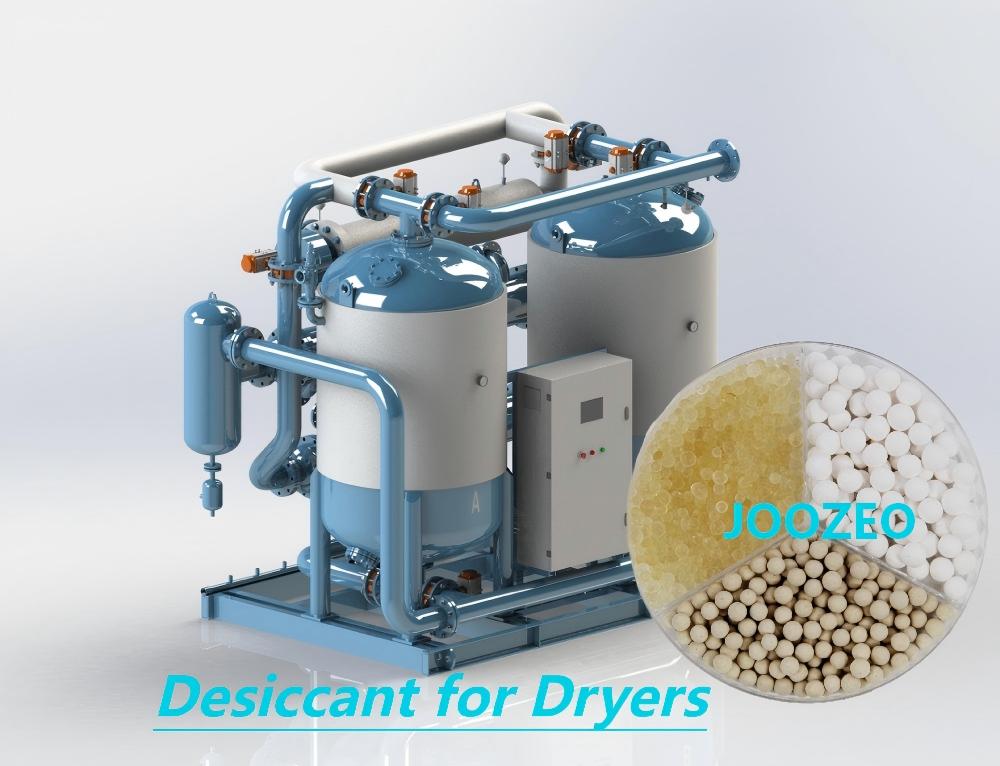
- Desiccant Air Dryers: These dryers use porous adsorbents like activated alumina and molecular sieves to deeply adsorb water vapor, achieving a pressure dew point as low as -40°C or even -80°C. They are ideal for applications with extremely high air quality requirements, such as pharmaceuticals, food processing, and precision instrumentation, serving as essential equipment for safeguarding high-end manufacturing processes.
Shanghai Jiuzhou researches, develops, and produces adsorbent materials such as activated alumina, molecular sieves, and silica gel, which are widely used in various desiccant dryers, helping enterprises achieve the goals of deep drying and stable operation.
Post time: Feb-28-2026