

Activated alumina is a porous, highly dispersed solid material. Due to its large specific surface area, excellent adsorption performance, good surface activity, and thermal stability, it is widely used in fields such as adsorption, drying, and catalysis. It is not a single product but a “big family”—capable of presenting various physical forms based on different preparation processes and application requirements.
Currently, based on appearance, activated alumina is mainly divided into the following four types:
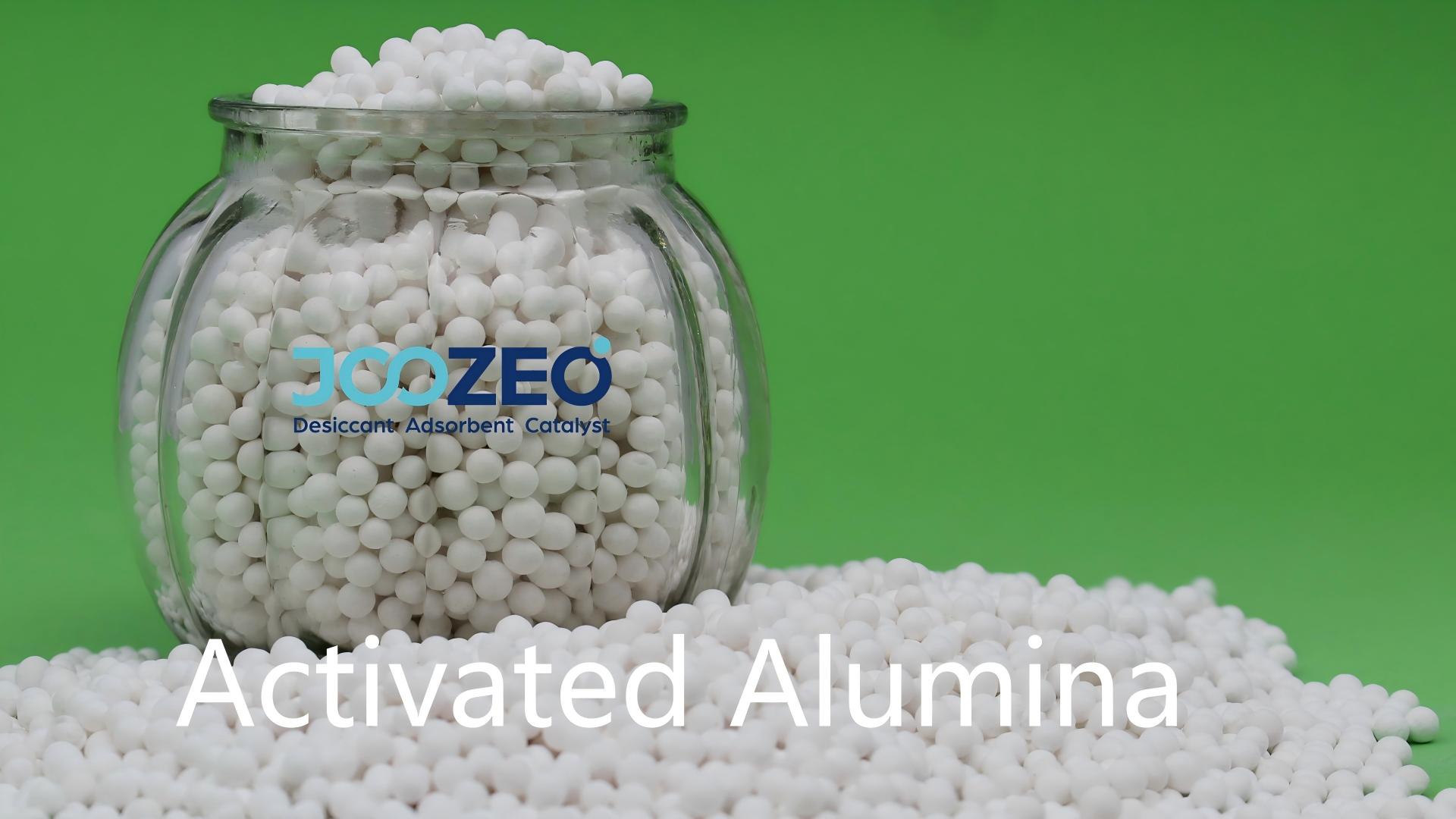
1. Spherical Activated Alumina
This is the most common and widely used form, typically ranging from 1 to 10mm in diameter, with a regular spherical shape.
Characteristics: Good fluidity, uniform bulk density
Advantages: Low bed resistance (pressure drop) during filling, not easily pulverized or worn, convenient loading and unloading
Applications: Widely used in compressed air drying, liquid phase adsorption, hydrogen peroxide purification, and as catalyst carrier
2. Extruded/Strip Activated Alumina
Cylindrical in shape, typically ranging from 1.5mm to 6mm in diameter, with a relatively large length-to-diameter ratio.
Characteristics: Regular shape, dense structure
Advantages: High mechanical strength, excellent wear resistance
Applications: Mainly used as catalyst carrier in fixed bed reactors, particularly suitable for high gas or liquid velocity conditions, maintaining long-term structural stability
3. Powdered Activated Alumina
This is an ultrafine powder at the micron or even nanometer level.
Characteristics: Extremely fine particles, very large specific surface area
Advantages: High reactivity, good dispersibility
Applications: Mainly used as raw material for catalyst preparation, ceramic additives, functional fillers for coatings, and also as precursor for preparing other forms of alumina (such as spherical and extruded forms)
4. Block/Honeycomb Activated Alumina
This is a monolithic structure formed through special molding processes, with regular channels inside.
Characteristics: Integral molding, regular channels
Advantages: Extremely low pressure drop, high mass transfer efficiency, large effective contact area per unit volume
Applications: Widely used in automotive exhaust catalyst carriers, industrial volatile organic compounds (VOCs) treatment, and other fields with strict requirements for pressure drop
From spherical to extruded, from powder to honeycomb—different forms of activated alumina have their own strengths and are suitable for various industrial scenarios. Shanghai Jiuzhou has been deeply involved in the adsorbent field for many years and can provide suitable activated alumina products and professional technical support based on your specific application needs.
If you have any requirements for adsorbent products, please feel free to contact Joozeo!
Post time: Feb-25-2026